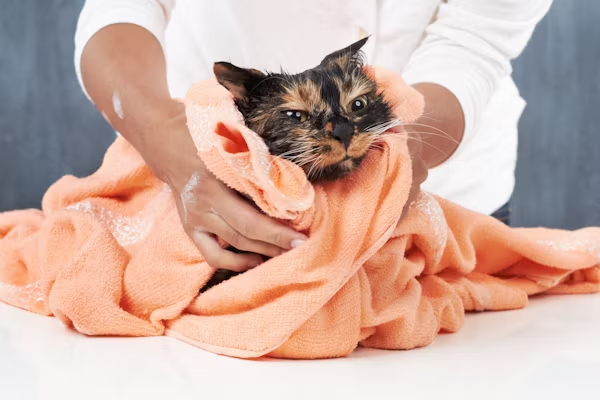
If you have been searching for an Abyssinian cat sale, you are probably already drawn to this breed’s wild-looking coat, bright eyes, athletic body, and playful personality. Abyssinian cats, often called “Abys,” are one of those breeds that immediately stand out. They do not just sit quietly in the background. They climb, explore, follow their people around, and turn everyday household life into an adventure.
That is one of the biggest reasons people look for Abyssinian cats for sale. They are not only beautiful; they are also intelligent, curious, affectionate, and full of energy. Many cat lovers describe them as lively companions rather than simple house pets. They want to be involved in what you are doing, whether you are working, cooking, cleaning, or relaxing.
But before buying one, it is important to understand the breed properly. An Abyssinian kitten can be a wonderful addition to the right home, but this is not a breed to buy in a hurry. You need to think about price, breeder reputation, health checks, registration papers, adoption options, and scam risks.
This guide is for:
- First-time buyers who want to understand the breed before purchasing
- Families looking for an active and social cat
- Pet lovers comparing Abyssinians with other breeds
- Future breeders researching pedigree cats
- Anyone searching online for Abyssinian kittens for sale near me
By the end of this guide, you will know what to look for, what questions to ask, and how to avoid common mistakes when buying or adopting an Abyssinian cat.
What Is an Abyssinian Cat?
The Abyssinian cat is a short-haired, medium-sized breed known for its elegant body, alert expression, and beautifully ticked coat. It is one of the most recognizable cat breeds in the world because its fur has a warm, glowing appearance that gives it a wild and exotic look.
Abyssinians are often considered one of the oldest cat breeds. Their exact origin is still debated, but the breed has long been associated with ancient-looking cats and early cat fancy history. Many people connect their appearance with cats seen in old Egyptian art, although modern breed history is more complex.
What makes the Abyssinian special is not only its appearance. This breed has a unique combination of beauty, intelligence, and energy. It is athletic without looking heavy, graceful without being delicate, and affectionate without being overly clingy.
For a deeper breed overview, you can visit the official Abyssinian breed profile from The Cat Fanciers’ Association.
Abyssinian Cat Appearance
Abyssinians have a balanced, muscular, and elegant body. They are usually medium-sized cats with a lithe, athletic build. They are not bulky like some larger breeds, but they are strong, active, and agile.
Common physical features include:
- Medium-sized body
- Muscular but elegant build
- Large, expressive eyes
- Large ears
- Long legs
- Fine, short coat
- Distinctive ticked fur
- Alert and curious expression
Their body gives the impression of a cat that is always ready to move. Many Abyssinians love to jump onto high shelves, climb cat trees, and explore every corner of the home.
The Signature Ticked Coat
The most famous feature of the Abyssinian cat is its ticked coat. Unlike a regular tabby cat that has clear stripes or swirls, an Abyssinian’s coat has individual hairs banded with different shades of color. This gives the coat a warm, shaded, glowing effect.
That ticked pattern is one reason Abyssinians look different from many other domestic cats. They may appear almost wild at first glance, but they are fully domestic cats with a people-loving personality.
Abyssinian Cat Temperament
Before searching for an Abyssinian cat for sale, it is important to understand the breed’s personality. Many people fall in love with the Abyssinian’s appearance first, but temperament is what affects daily life.
Abyssinians are known for being:
- Active
- Playful
- Curious
- Intelligent
- Social
- Affectionate
- Alert
- People-oriented
They are not usually the type of cat that sleeps all day and ignores the household. An Abyssinian wants to know what is happening. If you open a cupboard, they may want to inspect it. If you bring home a box, they may jump inside. If you are working on a laptop, they may sit nearby and supervise.
Are Abyssinian Cats Good Family Pets?
Yes, Abyssinian cats can be excellent family pets, especially for active homes. They often enjoy playing with people and being part of family life. Their playful personality can make them a good match for families with children who understand how to handle cats gently.
However, because Abyssinians are energetic, they need stimulation. A bored Abyssinian may become mischievous. This does not mean the cat is “bad”; it simply means the cat needs more play, climbing space, toys, and interaction.
Are Abyssinians Good with Children?
Many Abyssinians do well with children, especially when properly socialized from a young age. They are playful and curious, which can make them fun companions for respectful kids.
The key is teaching children to:
- Handle the cat gently
- Avoid pulling the tail or ears
- Give the cat space when needed
- Use toys instead of hands for play
- Respect the cat’s boundaries
Abyssinians are active cats, so they often enjoy interactive games. Wand toys, puzzle feeders, and climbing towers can help children and cats bond safely.
Are Abyssinians Good with Other Cats and Dogs?
Abyssinians are generally social cats and may do well with other cats and cat-friendly dogs. In many homes, they enjoy having another pet companion, especially if their humans are away for part of the day.
That said, introductions should always be slow. Even a friendly Abyssinian needs time to adjust to a new cat or dog.
A good introduction includes:
- Separate rooms at first
- Scent swapping
- Short supervised meetings
- Positive rewards
- No forced interaction
Do Abyssinian Cats Like to Be Held?
Some Abyssinians enjoy being held, but many prefer being near their owners rather than being carried for long periods. They are affectionate, but they often show love through activity and companionship instead of sitting still in your lap for hours.
An Abyssinian may follow you from room to room, sit beside you, sleep near you, or bring toys to you. That is their way of staying connected.
Why This Breed May Not Suit Every Owner
An Abyssinian is not the best choice for everyone. If you want a quiet, low-energy lap cat, this breed may feel too demanding.
Abyssinians may not suit:
- People who are away from home all day
- Owners who do not want to play daily
- Homes without climbing space
- Buyers looking for a very calm cat
- People who want a cat that is independent all the time
This breed is best for someone who enjoys an interactive, intelligent, and lively pet.
Abyssinian Cat for Sale: What Buyers Should Know First
When you see an Abyssinian cat sale listing, do not focus only on the photo or price. A beautiful kitten picture can be exciting, but responsible buying means checking the seller, health records, registration, and kitten care standards.
There are several things every buyer should understand before making a payment.
Kitten vs Adult Abyssinian Cat
Most people search for Abyssinian kittens for sale, but adult Abyssinians can also be a great choice.
| Option | Best For | Things to Consider |
|---|---|---|
| Abyssinian kitten | Buyers who want to raise the cat from a young age | Needs training, socialization, patience, and more supervision |
| Adult Abyssinian cat | Owners who want a more predictable personality | May need adjustment time in a new home |
| Retired breeding cat | People wanting a pedigree adult cat | Ask about health history and spay/neuter status |
| Rescue Abyssinian | Adoption-focused buyers | Purebred Abyssinians may be harder to find |
A kitten gives you the joy of watching the cat grow, but an adult cat may already have a clear personality. If you want a calmer option, an adult Abyssinian might be easier than a highly energetic kitten.
Pet-Quality vs Show-Quality Abyssinian Cats
Not every Abyssinian kitten is sold for the same purpose. Breeders may describe kittens as pet-quality, show-quality, or breeding-quality.
| Type | Meaning | Usually Best For |
| Pet-quality | Healthy kitten with breed traits, but may not be ideal for showing | Regular pet homes |
| Show-quality | Closely matches breed standard | Cat shows and serious breed enthusiasts |
| Breeding-quality | Suitable for responsible breeding programs | Registered breeders |
A pet-quality Abyssinian can still be beautiful, healthy, and loving. It simply may not have the exact features needed for show competition.
Registered vs Unregistered Abyssinian Cats
A registered Abyssinian is usually documented with a recognized cat registry such as CFA, TICA, GCCF, or another official organization depending on the country.
Registration helps confirm:
- Breed identity
- Pedigree background
- Breeder accountability
- Parentage records
- Show or breeding eligibility
You can learn more about recognized breed standards and registration through The International Cat Association Abyssinian breed page.
An unregistered cat may still be loved as a pet, but buyers should be careful. If someone is charging a high purebred price without papers, that is a red flag.
Why Pedigree Matters
Pedigree is not only about status. It helps show the cat’s family history. Responsible breeders use pedigree information to make better breeding decisions and reduce the risk of inherited health issues.
A pedigree can help answer questions like:
- Who are the kitten’s parents?
- Are there champion bloodlines?
- Has the breeder tracked family health?
- Is the cat truly an Abyssinian?
- Are there known genetic concerns in the line?
Why Cheap Abyssinian Kittens Can Be Risky
Everyone likes a good deal, but a very cheap Abyssinian kitten can be risky. Some low-cost listings may come from backyard breeders, kitten mills, or scammers using stolen photos.
A very low price may mean:
- No health testing
- No vaccination records
- No registration papers
- Poor socialization
- Unsafe breeding conditions
- Hidden illness
- Fake online listing
The cheapest kitten can become the most expensive if you later face serious vet bills or discover the seller was dishonest.
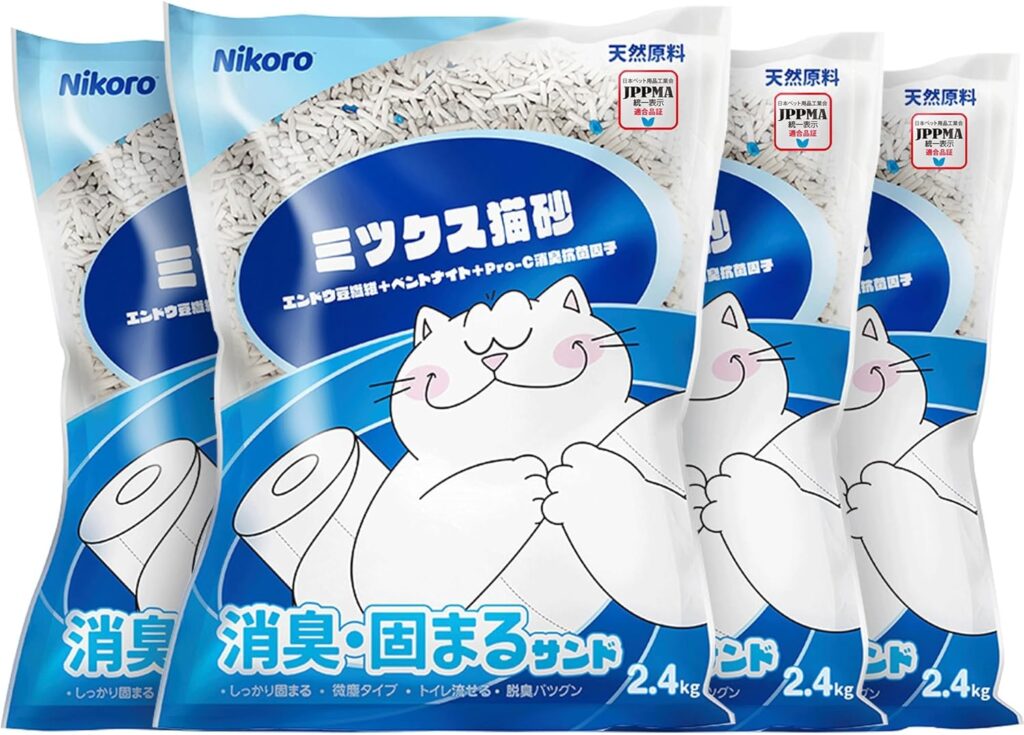
NIKORO Tofu Cat Litter
NIKORO Tofu Cat Litter, Strong Clumping Cat Litters, Odor Control and Unscented Ultra Absorbent Water Flushable Tofu Cat Litter, Dust Free Scent Free,21 lbs(5.29 lbs×4Bags)
Abyssinian Kittens for Sale
Abyssinian kittens are lively, curious, and often full of confidence. They are adorable, but they also need time with their mother and littermates before going to a new home.
What Age Should an Abyssinian Kitten Leave Its Mother?
A responsible breeder usually does not send kittens home too early. Kittens need time to develop physically, socially, and emotionally.
Very young kittens may struggle with:
- Eating solid food
- Litter training
- Social behavior
- Immune strength
- Stress in a new environment
A kitten that leaves too early may develop behavior or health problems. That is why buyers should avoid sellers who say a kitten is ready at a very young age just to make a quick sale.
What to Expect When Visiting a Litter
If you visit an Abyssinian breeder, pay attention to more than the kittens. Look at the environment, the mother cat, and how the breeder interacts with the animals.
A good visit should feel calm, clean, and transparent.
Look for:
- Clean living spaces
- Healthy-looking kittens
- Friendly behavior
- Fresh food and water
- Safe surroundings
- Kittens that are active but not fearful
- Breeder who answers questions clearly
If the seller refuses visits or only wants to meet in a parking lot, be careful. Some breeders may limit visits for health reasons, but they should still offer safe verification, such as video calls, references, and proper documentation.
Signs of a Healthy Abyssinian Kitten
A healthy kitten should look bright, alert, and active.
Signs to check include:
- Clear eyes
- Clean nose
- Clean ears
- Healthy coat
- Good energy
- Normal breathing
- No visible diarrhea
- No constant sneezing
- Good appetite
- Comfortable movement
A kitten should not appear weak, extremely thin, dirty, or unusually quiet.
Signs of a Well-Socialized Kitten
Socialization matters, especially with a smart and active breed like the Abyssinian. A well-socialized kitten is more likely to adjust confidently to a new home.
Good signs include:
- Curious but not panicked
- Comfortable around people
- Used to household sounds
- Plays with littermates
- Allows gentle handling
- Recovers quickly from small surprises
- Shows interest in toys and people
A shy kitten is not always unhealthy, but extreme fear may suggest poor socialization or stressful living conditions.
What Should Be Included When Buying an Abyssinian Kitten?
When buying an Abyssinian kitten, you should receive more than just the cat.
A responsible sale may include:
- Vaccination record
- Deworming record
- Veterinary health check
- Registration papers or application
- Pedigree information
- Written purchase contract
- Feeding instructions
- Litter information
- Health guarantee
- Microchip details, if applicable
- Spay/neuter agreement, if applicable
A breeder who gives clear paperwork is usually more trustworthy than one who avoids documentation.
Adult Abyssinian Cats for Sale
While kittens get most of the attention, adult Abyssinians can be wonderful pets. In fact, an adult cat may be a better choice for some homes.
Benefits of Buying or Adopting an Adult Abyssinian
Adult cats have more predictable personalities. With kittens, you can guess temperament, but they are still developing. With adults, you can usually see whether the cat is bold, gentle, playful, shy, or highly social.
Benefits include:
- Personality is easier to judge
- Often less demanding than kittens
- May already be litter trained
- May cost less than a kitten
- Can be a good option for calm homes
- Retired breeding cats may be well-socialized
Retired Breeding Cats
Some breeders occasionally place retired breeding cats in pet homes. These cats may be registered, health-checked, and well cared for. They are usually adults and may already be spayed or neutered before going to a new owner.
Before buying a retired breeding Abyssinian, ask:
- Why is the cat being retired?
- Is the cat spayed or neutered?
- What is the cat’s health history?
- Is the cat used to living indoors?
- Is the cat friendly with other pets?
- What kind of home would suit the cat best?
Rescue or Rehoming Options
Purebred Abyssinians are not always easy to find in shelters, but adoption is still possible. Some cats are rehomed because of owner illness, moving, allergies, or lifestyle changes.
You can check:
- Breed-specific rescue groups
- Local shelters
- Cat adoption websites
- Abyssinian clubs
- Social media rehoming groups
- Local cat communities
Adoption may take longer, but it can be a rewarding way to give an Abyssinian a second chance.
Abyssinian Cat Price
One of the first questions buyers ask is: How much does an Abyssinian cat cost?
The answer depends on location, breeder reputation, pedigree, registration, age, health testing, and whether the cat is pet-quality or show-quality.
Average Abyssinian Cat Price
Abyssinian cat prices vary widely. In many markets, a pet-quality Abyssinian kitten from a reputable breeder may cost significantly more than a non-pedigree domestic kitten. Show-quality or breeding-rights cats usually cost more.
Here is a general guide:
| Category | Typical Price Level | Notes |
| Adoption or rescue | Lower cost | May include basic vet care |
| Adult Abyssinian | Moderate | Often less expensive than kittens |
| Pet-quality kitten | Moderate to high | Best for regular pet homes |
| Show-quality kitten | High | Closer to breed standard |
| Breeding-rights cat | Highest | Usually only for approved breeders |
Prices can change based on country and demand, so always compare local breeders and ask what is included.
Why Prices Vary
Two Abyssinian kittens may look similar in photos but have very different prices. That difference often comes from what happens behind the scenes.
Price may be affected by:
- Breeder experience
- Pedigree and bloodline
- Parent health testing
- Registration with CFA, TICA, GCCF, or another registry
- Show titles in the bloodline
- Kitten socialization
- Vaccinations and vet checks
- Coat color
- Local demand
- Transport or shipping cost
A higher price does not always guarantee quality, but responsible breeding does cost money. Ethical breeders invest in health testing, quality food, vet care, safe housing, and proper kitten development.
Adoption Fees vs Breeder Prices
Adoption is usually less expensive than buying from a breeder. However, finding a purebred Abyssinian through adoption can be difficult because they are less common than regular domestic cats.
Adoption fees may include:
- Spay/neuter
- Vaccinations
- Microchip
- Basic vet exam
- Parasite treatment
Buying from a breeder usually costs more, but you may get pedigree documents, breeder support, and more information about the kitten’s parents.
Why the Cheapest Option Is Not Always Safest
When searching online for Abyssinian cats for sale, it can be tempting to choose the lowest price. But with purebred cats, an unusually cheap price should make you pause.
A cheap listing may hide:
- No health testing
- No vet care
- Poor breeding conditions
- No real pedigree
- Fake photos
- A scam seller
- Sick kittens
A safe purchase is not only about price. It is about trust, health, documentation, and responsible breeding.
Factors That Affect Abyssinian Cat Price
Several factors can raise or lower the cost of an Abyssinian cat.
1. Breeder Reputation
A reputable breeder usually charges more because they invest more into their cats. They may be part of breed clubs, show cats, perform genetic testing, and provide long-term support.
2. Pedigree and Bloodline
Kittens from strong pedigree lines or champion parents may cost more. This is especially true for show-quality cats.
3. Registration
Cats registered with respected organizations usually cost more than unregistered cats. Registration helps confirm the cat’s breed background.
4. Coat Color
Some colors may be more in demand depending on the region. Ruddy is one of the most recognized colors, while blue, sorrel, fawn, silver, chocolate, or lilac may vary by registry and availability.
5. Age
Kittens usually cost more than adults. Retired breeding cats or adult rehomes may be more affordable.
6. Health Testing
Health testing increases breeder costs, but it also protects buyers and future kittens. This is especially important for inherited conditions.
7. Location and Demand
If Abyssinian breeders are rare in your area, prices may be higher. Transport or shipping can also add to the total cost.
Abyssinian Cat Colors
Abyssinian cats are famous for their warm, ticked coats. Their colors can look rich and glowing because each hair has bands of color.
Common Abyssinian colors include:
| Color | Description |
| Ruddy | Warm brown or golden-brown base with darker ticking |
| Sorrel | Reddish or cinnamon-toned coat |
| Blue | Soft blue-gray ticking with warm undertones |
| Fawn | Light beige or warm cream appearance |
| Silver | Pale silver base with ticking |
| Chocolate | Warm chocolate tones, accepted in some registries |
| Lilac | Pale diluted chocolate tone, accepted in some registries |
Color names and acceptance can vary depending on the cat registry and country. If color is important to you, ask the breeder which registry standard they follow.
Which Abyssinian Color Is Most Common?
Ruddy is often the most recognized and classic Abyssinian color. Many people picture a ruddy Abyssinian when they think of the breed.
Which Colors May Cost More?
Less common colors may cost more in some areas, but color should not be your only focus. Health, temperament, breeder quality, and documentation are more important than coat color.
How Coat Color Develops as Kittens Grow
Abyssinian kittens may not show their full adult color immediately. Their coat can become richer and clearer as they mature. A responsible breeder can help you understand how a kitten’s color may develop over time.
Where to Find Abyssinian Cats for Sale
Finding an Abyssinian cat is not always as simple as visiting the nearest pet shop. Because this is a pedigree breed, it is better to search carefully and verify the seller.
Registered Abyssinian Breeders
The safest place to start is usually a registered breeder. Look for breeders who follow ethical breeding practices, provide health records, and are transparent about their cats.
You can search through:
- Cat breeder directories
- Breed clubs
- CFA breeder resources
- TICA breeder resources
- GCCF breeders in the UK
- Local cat associations
- Cat shows
A useful place to start researching responsible breed information is the Abyssinian Breed Council.
Local Cat Clubs and Cat Shows
Cat shows are a great way to meet breeders in person. You can see Abyssinians, ask questions, and learn what a healthy, well-bred cat looks like.
Benefits of cat shows include:
- Meeting real breeders
- Seeing adult Abyssinians
- Learning about breed standards
- Asking about future litters
- Building trust before buying
Rescue Organizations and Adoption Websites
If you prefer adoption, check local shelters, breed rescues, and adoption platforms. Purebred Abyssinians may not appear often, but adult cats and mixes can sometimes become available.
Adoption is a good option if you are patient and open-minded.
Online Marketplaces
Online marketplaces may show many listings for Abyssinian kittens for sale, but they also carry risks. Some sellers are genuine, while others may be irresponsible or fraudulent.
Be careful with:
- Sellers who only use stock photos
- Prices that seem too low
- No health documents
- No registration papers
- Refusal to video call
- Pressure to send money fast
- No clear location or identity
Social Media Breeder Pages
Some reputable breeders use Facebook, Instagram, or websites to share updates. Social media can be helpful, but it should not replace proper verification.
Before trusting a social media seller:
- Check how long the page has existed
- Look for real comments and history
- Ask for video calls
- Request references
- Verify registration
- Search images to check if they are stolen
- Never pay without proper proof
How to Choose a Reputable Abyssinian Breeder
When searching for an Abyssinian cat sale, the breeder matters as much as the kitten. A beautiful kitten photo is not enough. A responsible breeder protects the health, temperament, and future of the breed. A careless breeder may focus only on selling kittens quickly.
A reputable Abyssinian breeder should be open, organized, and willing to explain their breeding practices. They should know their cats well and care about where each kitten goes. In many cases, a good breeder will ask you questions too. That is a positive sign, not a problem.
A responsible breeder may ask about:
- Your home environment
- Your experience with cats
- Whether you have children or other pets
- How much time you can give the kitten
- Whether the cat will live indoors
- Your plan for vet care
- Your expectations from the breed
This shows that the breeder is not just selling a product. They are trying to place a living animal in the right home.
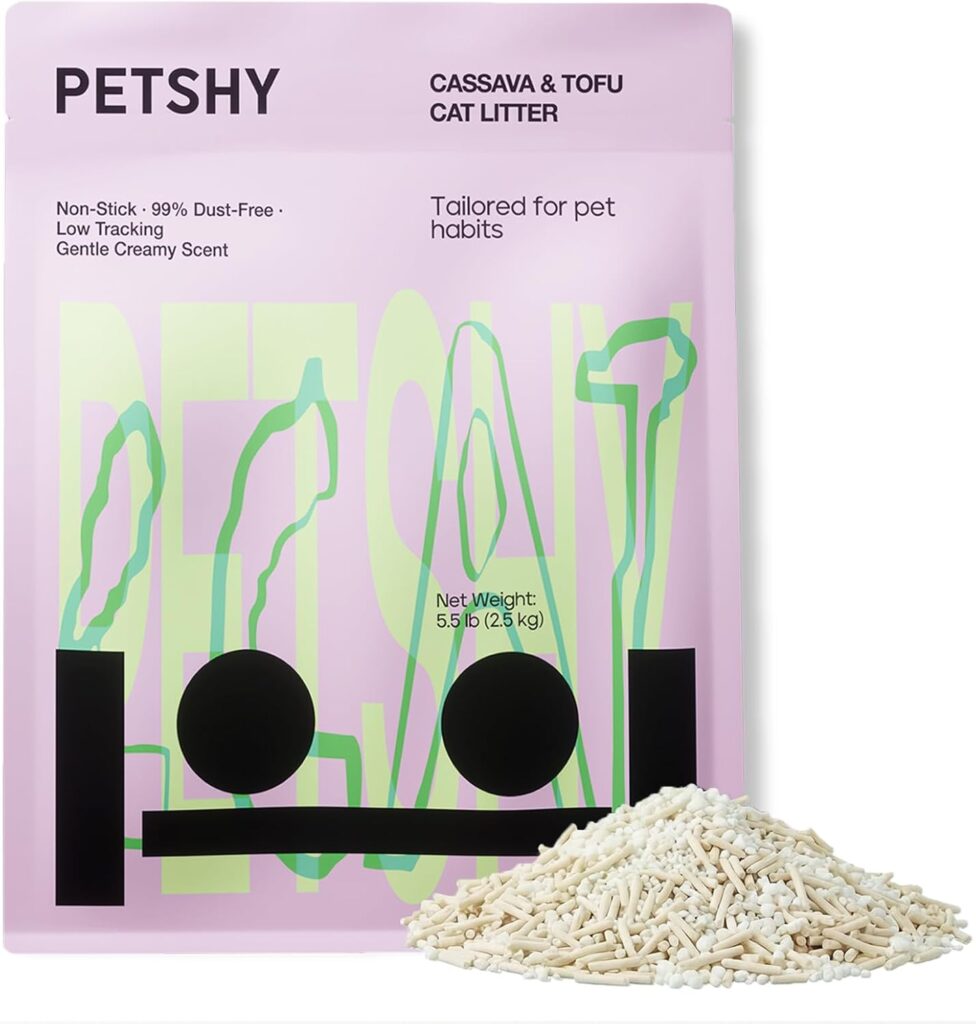
Cassava & Tofu Mixed Cat Litter
Cassava & Tofu Mixed Cat Litter – Plant-Based & Natural Ingredients, Non-Stick, Fast Clumping, 99% Dust Free for Litter Box – Scented, 5.5lb
Signs of a Good Abyssinian Breeder
A good breeder usually provides clear information and does not rush the buyer. They should be able to show proof of health care, registration, and responsible breeding.
| Good Breeder Sign | Why It Matters |
|---|---|
| Registered cats | Helps confirm breed identity and pedigree |
| Clean living conditions | Shows proper care and hygiene |
| Health records available | Helps protect the buyer and kitten |
| Written contract | Makes responsibilities clear |
| Health guarantee | Shows breeder confidence and accountability |
| Kitten socialization | Helps kittens adjust better to new homes |
| Transparent communication | Builds trust before payment |
| After-sale support | Helps new owners with adjustment and care |
A breeder who is proud of their cats will usually be happy to discuss their care, diet, personality, and health history.
Red Flags to Avoid
Not every person advertising Abyssinian kittens for sale is a responsible breeder. Some may be backyard breeders, brokers, or scammers. Others may have good intentions but poor breeding practices.
Be careful if the seller:
- Refuses to answer basic questions
- Will not show the kitten’s mother
- Cannot provide health records
- Has no registration papers
- Always has many litters available
- Offers several unrelated breeds at the same time
- Pushes you to pay quickly
- Gives unclear or changing information
- Will not provide a written agreement
- Uses copied or low-quality photos
- Avoids video calls or live proof
A trustworthy seller should make you feel informed, not pressured.
Questions to Ask an Abyssinian Breeder
Before reserving a kitten, prepare your questions. A serious breeder will expect them. Asking the right questions helps you avoid mistakes and gives you a better idea of the kitten’s health, background, and future needs.
Important Questions Before Buying
Ask the breeder:
- Are the kittens registered?
Registration helps confirm that the kitten is a true Abyssinian and comes from a known pedigree. - Can I see the parents?
Seeing the mother, and sometimes the father, can give you an idea of size, appearance, and temperament. - What health tests have been done?
Responsible breeders may test for inherited conditions known in the breed. - Are vaccinations included?
Ask which vaccines the kitten has received and when the next ones are due. - Has the kitten been dewormed?
Deworming is a normal part of kitten care. - Is the kitten litter trained?
Most kittens from good breeders should already be using a litter box before leaving. - What food is the kitten currently eating?
Keeping the same food at first can reduce stomach upset after moving. - Do you provide a written contract?
A contract protects both buyer and breeder. - Is there a health guarantee?
Ask what the guarantee covers and for how long. - What happens if I can no longer keep the cat?
Many responsible breeders want the cat returned to them rather than passed around. - Do you offer after-sale support?
A good breeder will often guide you during the kitten’s adjustment period.
Why These Questions Matter
Buying a purebred cat is not just about choosing the cutest kitten. You are also choosing the person who raised that kitten. The breeder’s answers can tell you a lot.
A good breeder will answer clearly. A poor seller may become defensive, vague, or impatient. If you feel uncomfortable before buying, it is better to walk away.
Documents You Should Receive When Buying an Abyssinian Cat
Documentation is very important when buying a pedigree cat. It proves that the breeder is organized and gives you important information for future care.
When buying an Abyssinian kitten or adult cat, you may receive:
| Document | Purpose |
| Pedigree certificate | Shows the cat’s family background |
| Registration papers | Confirms registration with a cat association |
| Vaccination record | Shows vaccines already given |
| Veterinary health certificate | Confirms a vet has examined the cat |
| Microchip details | Helps identify the cat if lost |
| Purchase agreement | Explains sale terms |
| Health guarantee | Covers specific health conditions for a set period |
| Feeding guide | Helps continue the kitten’s current diet |
| Care instructions | Gives grooming, litter, and adjustment advice |
| Spay/neuter agreement | Common for pet-quality kittens |
Not every country or breeder uses the same paperwork, but you should always receive basic health records and a clear written agreement.
Be Careful with “Papers Later”
Some sellers say they will provide registration papers later. Sometimes this may be genuine, but it can also be a warning sign. Ask for a clear explanation. If registration is important to you, do not rely only on verbal promises.
Before paying in full, confirm:
- Which registry the cat belongs to
- Whether papers are included in the price
- When you will receive them
- Whether the kitten is sold as pet-only
- Whether breeding rights are included or restricted
Abyssinian Cat Health Checks Before Buying
Health should always come before color, price, or availability. Abyssinians are generally active and lively cats, but like all breeds, they can have health concerns. A careful buyer should check the kitten’s condition and ask for proper vet records.
General Physical Condition
A healthy Abyssinian kitten should look alert and bright. The body should feel firm, not weak or bony. The kitten should move easily and show interest in people, toys, or surroundings.
Look for:
- Clear, bright eyes
- Clean nose
- Clean ears
- Smooth coat
- Good appetite
- Normal breathing
- Healthy weight
- Active behavior
- Clean rear area
- No strong unpleasant odor
A kitten does not need to be hyperactive every second, but it should not seem weak, dull, or constantly hiding.
Warning Signs in a Kitten
Avoid buying a kitten that shows obvious signs of illness unless a vet has clearly explained the condition and treatment.
Warning signs include:
- Watery or crusty eyes
- Constant sneezing
- Coughing
- Labored breathing
- Dirty ears with heavy discharge
- Diarrhea
- Swollen belly
- Limping
- Bald patches
- Extreme fear or weakness
- Poor appetite
Some minor issues can be treated, but you should not be pressured into taking a sick kitten without full information.
Veterinary Examination
A responsible breeder should have kittens checked by a veterinarian before they leave. Ask for proof of the vet exam and any treatments given.
A basic vet record may include:
- Date of examination
- Weight
- Vaccinations
- Deworming
- Flea treatment, if needed
- General health notes
- Any follow-up required
After bringing the kitten home, schedule your own vet visit as soon as possible. Many breeder contracts require a vet check within a few days of purchase.
Vaccination Status
Vaccination schedules can vary by country and vet recommendation. Ask the breeder which vaccinations have already been given and when the next doses are due.
Do not guess. Take the vaccination record to your vet and ask them to continue the schedule.
Parasite Treatment
Kittens may need deworming and parasite prevention. Ask:
- Has the kitten been dewormed?
- What product was used?
- When was the last treatment?
- Is flea prevention needed?
- Has the mother cat been treated too?
This information helps your vet plan the next steps.
Genetic Health Screening
Because Abyssinians can be associated with some inherited conditions, genetic testing can be important. Not every breeder will do every possible test, but a responsible breeder should be able to discuss breed-related health risks honestly.
Health screening is one reason reputable breeders may charge more. They are not only selling a kitten; they are investing in healthier breeding decisions.
Common Health Issues in Abyssinian Cats
No breed is completely free from health problems. Abyssinians are generally known as active and athletic cats, but buyers should be aware of conditions that can appear in the breed.
This does not mean every Abyssinian will develop these issues. It simply means buyers should ask informed questions.
Pyruvate Kinase Deficiency
Pyruvate kinase deficiency, often shortened to PK deficiency, is an inherited condition that can affect red blood cells and may lead to anemia. Responsible breeders may use genetic testing to reduce the chance of producing affected kittens.
Ask the breeder whether the parents have been tested or cleared.
Progressive Retinal Atrophy
Progressive retinal atrophy, or PRA, is an inherited eye condition that can lead to vision loss. Genetic screening can help breeders make safer breeding choices.
A good breeder should not be offended if you ask about PRA testing. It is a reasonable health question.
Gingivitis and Dental Disease
Some cats, including Abyssinians, can be prone to dental problems. Regular dental care, vet checks, and proper diet can help reduce risk.
Dental care may include:
- Regular vet dental checks
- Tooth brushing if tolerated
- Dental treats approved by your vet
- Monitoring bad breath or gum redness
Kidney-Related Concerns
Some Abyssinians may be associated with kidney-related health concerns. Regular vet care, good hydration, and early testing can help detect problems sooner.
Ask the breeder if there is any history of kidney disease in the line.
Patellar Luxation
Patellar luxation means the kneecap can move out of normal position. It is not limited to Abyssinians, but it is something buyers can ask about if they notice movement problems or if there is known history in the line.
Why Regular Vet Care Matters
Even if your Abyssinian comes from a healthy line, regular vet care is still important. A yearly checkup can help catch issues early. Kittens, seniors, and cats with health concerns may need more frequent visits.
A healthy Abyssinian lifestyle includes:
- Routine vet exams
- Vaccinations
- Parasite prevention
- Dental checks
- Healthy diet
- Weight monitoring
- Safe indoor living
- Daily exercise and play
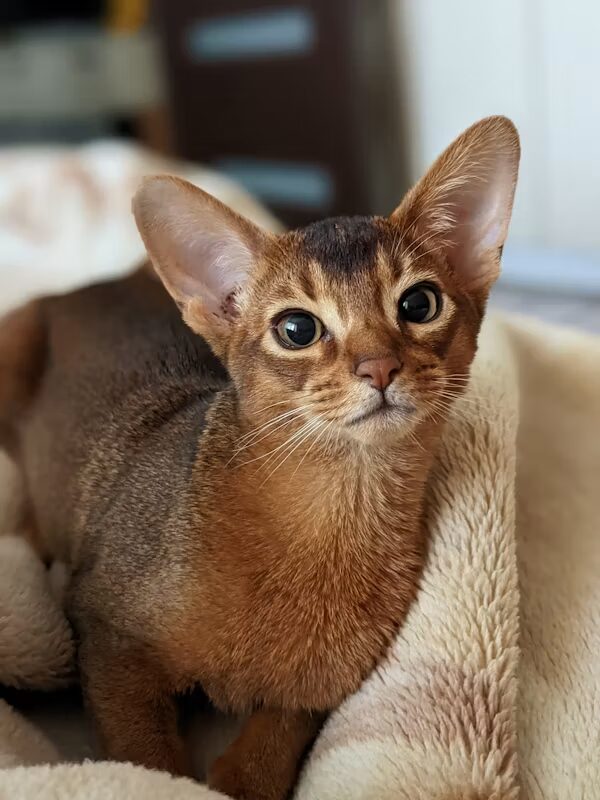
Abyssinian Cat Adoption
Not every buyer wants to purchase from a breeder. Some people search for Abyssinian cat adoption because they want to give a cat a second chance. Adoption can be a wonderful option, but it may require patience.
Can You Adopt an Abyssinian Cat?
Yes, it is possible to adopt an Abyssinian cat, but purebred Abyssinians are not always common in shelters. Because they are a desirable breed, they may be adopted quickly when they appear.
You may find:
- Adult Abyssinians
- Abyssinian mixes
- Retired breeding cats needing homes
- Cats rehomed by owners
- Rescue cats from breed groups
Why Purebred Abyssinians May Be Rare in Shelters
Purebred cats often come from breeders who may require cats to be returned to them if the owner can no longer keep them. Also, because Abyssinians are popular, they may not stay available for long.
That does not mean adoption is impossible. It just means you may need to search regularly and be flexible.
Adoption vs Buying from a Breeder
| Option | Pros | Cons |
| Adoption | Lower cost, gives cat a home, may include basic vet care | Purebred Abyssinians may be rare |
| Breeder purchase | Known pedigree, kitten availability, breeder support | Higher cost |
| Adult rehome | Personality is known, may be more affordable | History may be incomplete |
| Retired breeder cat | Often pedigree and well cared for | May need adjustment after breeding life |
Questions to Ask Before Adopting
Before adopting an Abyssinian or Abyssinian mix, ask:
- Why is the cat available?
- How old is the cat?
- Is the cat spayed or neutered?
- Is the cat vaccinated?
- Does the cat have known health issues?
- Is the cat good with children?
- Is the cat good with other cats or dogs?
- What is the cat’s personality like?
- Does the cat have any behavior problems?
- What food and litter does the cat use?
The more you know before adoption, the easier the transition will be.
Abyssinian Cat Sale Near Me
Many buyers search for Abyssinian cat sale near me because they want to find a local breeder or available kitten. Buying locally can be a good idea because it gives you more chances to verify the seller.
How to Search Locally
You can search using phrases like:
- Abyssinian kittens for sale near me
- Abyssinian cat breeders near me
- Abyssinian cat for sale in my area
- Registered Abyssinian breeder near me
- Abyssinian cat adoption near me
Also check local cat clubs, pet communities, and cat shows. Sometimes good breeders do not advertise heavily on public marketplaces because they already have waiting lists.
Why Local Pickup Can Be Safer
Local pickup can reduce some risks because you may be able to:
- Meet the breeder
- See the kitten in person
- View living conditions
- Ask questions directly
- Avoid shipping stress
- Confirm documents before payment
Not every breeder allows full home visits for safety or hygiene reasons, but they should still offer reasonable verification.
Visiting the Breeder in Person
If you visit, observe carefully. Do not only focus on the kitten you like.
Check:
- Are the cats clean and healthy?
- Is the environment safe?
- Do the cats seem socialized?
- Does the breeder know each kitten’s personality?
- Are there too many cats in poor conditions?
- Is the mother cat present?
- Are documents ready?
Trust your instincts. If something feels wrong, pause before making a decision.
Local Cat Shows and Clubs
Cat shows are one of the best ways to meet serious breeders. You may not buy a kitten at the show, but you can make contacts and learn about future litters.
At a cat show, you can:
- See adult Abyssinians
- Compare colors
- Understand breed type
- Meet breeders face to face
- Ask about waiting lists
- Learn about responsible ownership
Buying an Abyssinian Cat Online
Buying an Abyssinian online can be safe if you are careful, but it also carries more risk. Scammers often target people searching for expensive or rare breeds because buyers may be emotionally excited and ready to pay quickly.
Is It Safe to Buy an Abyssinian Cat Online?
It can be safe if the seller is real, transparent, and verifiable. Many reputable breeders have websites or social media pages. The problem is that scammers can copy photos, create fake pages, and pretend to have kittens available.
Never rely only on cute pictures.
How to Verify Online Sellers
Before sending money, verify the seller through several steps:
- Ask for a video call
- Ask to see the kitten live on camera
- Ask to see the mother cat
- Request health records
- Request registration details
- Search the breeder’s name online
- Check reviews and references
- Ask for a written contract
- Confirm the physical location
- Look for long-term online history
A real breeder should be able to prove they are connected to the cats they are selling.
Avoiding Stolen Kitten Photos
Scammers often steal photos from real breeders. You can protect yourself by doing a reverse image search. Also ask for a custom video showing the kitten with something specific, such as today’s date written on paper.
Be suspicious if:
- The same photo appears on many websites
- The seller refuses new photos
- The background changes in every image
- The kitten looks different in each picture
- The seller avoids live video
Never Pay Without Verification
Do not send a deposit until you are confident the seller is real. A deposit is normal with reputable breeders, but it should come after communication, verification, and written terms.
Avoid sellers who demand immediate payment or say someone else will take the kitten unless you pay now.
Safe Payment Methods
Use payment methods that provide some protection when possible. Avoid unusual payment requests, gift cards, cryptocurrency, or wire transfers to unknown people.
A serious breeder should have a professional payment process and a written agreement.
Shipping Risks
Some breeders ship kittens, but shipping should be handled carefully. Travel can be stressful for young animals. If transport is needed, ask exactly how it will be arranged.
Ask:
- Who handles transport?
- Is the kitten old enough to travel?
- What health certificate is required?
- Will the kitten travel in cabin or cargo?
- What happens if travel is delayed?
- Is transport cost included?
If the seller talks about shipping casually but gives no details, be cautious.
Abyssinian Cat Scam Warning Signs
Because Abyssinians can be expensive, scams are common in online pet sales. A scammer may create a fake listing, use stolen photos, ask for a deposit, and then disappear.
Common Scam Red Flags
Watch out for:
- Price far below market rate
- Seller refuses video call
- Seller will not show the parents
- No registration papers
- No health records
- Pressure to pay quickly
- Poor grammar or copied descriptions
- Multiple breeds always available
- Unusual payment methods
- No physical address
- No breeder history
- Fake shipping fees after payment
- Emotional stories used to rush you
Example of a Risky Listing
A risky listing might say:
“Beautiful Abyssinian kittens ready now. Very cheap price. Shipping available anywhere. Pay deposit today to reserve. No papers but pure breed.”
This kind of listing has several warning signs: cheap price, instant availability, shipping anywhere, no papers, and pressure to pay.
What a Safer Listing Looks Like
A safer breeder listing may include:
- Breeder name
- Location
- Registry information
- Kitten age
- Parent information
- Health testing details
- Vaccination status
- Clear price
- Contract terms
- Application process
- Waiting list information
Good breeders do not usually sound desperate. They are careful about where their kittens go.
Cost of Owning an Abyssinian Cat
The purchase price is only the beginning. Before buying an Abyssinian cat, consider the full cost of ownership.
Abyssinians are active cats, so they need quality food, toys, climbing spaces, vet care, and enrichment.
Initial Costs
| Item | Why You Need It |
| Purchase or adoption fee | Cost of getting the cat |
| Vet check | Confirms health after arrival |
| Vaccinations | Protects against common diseases |
| Spay/neuter | Needed if not already done |
| Microchip | Helps identify a lost cat |
| Carrier | Safe travel |
| Litter box | Daily hygiene |
| Food and water bowls | Feeding setup |
| Scratching posts | Protects furniture |
| Cat tree | Essential for climbing and exercise |
| Toys | Prevents boredom |
Ongoing Costs
Monthly and yearly costs can include:
- High-quality cat food
- Litter
- Routine vet care
- Vaccination boosters
- Dental care
- Pet insurance
- Toys and enrichment
- Grooming supplies
- Emergency vet savings
Emergency Vet Budget
Even healthy cats can have emergencies. It is wise to keep savings or pet insurance for unexpected vet costs. Abyssinians are active and curious, so safe indoor spaces are important to reduce accidents.
Annual Ownership Cost Estimate
The yearly cost depends on your country, vet prices, food choice, and lifestyle. A simple estimate should include:
| Category | Cost Level |
| Food | Moderate |
| Litter | Moderate |
| Routine vet care | Moderate |
| Toys and enrichment | Low to moderate |
| Dental care | Moderate to high |
| Emergency care | Can be high |
| Pet insurance | Optional but useful |
Abyssinians are not usually the most expensive cats to maintain, but they are not a “cheap pet” either. Responsible ownership means budgeting beyond the buying price.
Preparing Financially Before Buying
Before you bring home an Abyssinian, ask yourself:
- Can I afford the purchase price?
- Can I pay for quality food?
- Can I handle yearly vet care?
- Do I have an emergency fund?
- Can I buy climbing furniture and toys?
- Can I afford dental care if needed?
- Am I ready for long-term responsibility?
An Abyssinian may live for many years, so buying one should be a long-term decision.
Abyssinian Cat Care Requirements
Before buying from an Abyssinian cat sale, it is important to understand what daily life with this breed looks like. Abyssinians are not difficult cats in the sense of grooming, but they do need attention, activity, and mental stimulation.
They are active, smart, and social. That means they need more than food, water, and a litter box. They need a home that allows them to climb, play, explore, and interact with people.
Daily Play and Enrichment
Abyssinians love movement. They enjoy jumping, chasing, climbing, and investigating. If they do not get enough activity, they may create their own entertainment, which can include opening cabinets, knocking things over, or climbing places you did not expect.
Daily enrichment can include:
- Interactive wand toys
- Puzzle feeders
- Cat trees
- Wall shelves
- Treat-hunting games
- Training sessions
- Rotating toys
- Window perches
- Safe climbing areas
Abyssinians usually enjoy being part of the household routine. They may follow you around, watch what you are doing, and try to join in.
High-Quality Diet
Because Abyssinians are active cats, they need a balanced, high-quality diet. Choose food that is appropriate for their age, weight, and health condition. Kittens need kitten food, adults need adult maintenance food, and seniors may need a diet recommended by a vet.
Good nutrition supports:
- Healthy muscles
- Strong energy levels
- Good coat condition
- Immune health
- Healthy weight
- Long-term wellness
If you are bringing home a kitten, ask the breeder what food the kitten is currently eating. Change food slowly to avoid stomach upset.
Grooming Needs
Abyssinians have short coats, so grooming is usually simple. Their coat does not mat easily, but regular brushing can help remove loose hair and keep the coat looking shiny.
Basic grooming includes:
| Grooming Task | How Often |
|---|---|
| Brushing | Weekly or as needed |
| Nail trimming | Every 2–4 weeks |
| Ear check | Weekly |
| Dental care | Regularly, based on vet advice |
| Bathing | Rarely needed |
Abyssinians are naturally clean cats, but they still benefit from regular care.
Indoor vs Outdoor Living
Many breeders recommend keeping Abyssinians indoors or allowing only supervised outdoor access. Because they are curious and active, outdoor life can expose them to risks such as traffic, theft, fights, disease, parasites, and injury.
Safer options include:
- Indoor living with enrichment
- Catio or enclosed outdoor space
- Harness training
- Supervised garden time
- Window perches for outdoor viewing
An indoor Abyssinian can live a happy life if the home provides enough stimulation.
Are Abyssinian Cats Hypoallergenic?
Many people searching for Abyssinian cats for sale also ask whether the breed is hypoallergenic. The simple answer is: No cat breed is truly 100% hypoallergenic.
Abyssinians have short coats and may shed less than some long-haired breeds, but they still produce allergens. Cat allergens are not only in the fur. They are also found in saliva, skin oils, and dander.
Are Abyssinians Good for Allergy Sufferers?
Some allergy sufferers may tolerate Abyssinians better than heavier-shedding breeds, but this depends on the person. One person may do well with an Abyssinian, while another may still react.
Before buying, try to spend time around Abyssinians if possible. Visit a breeder, meet an adult cat, or spend time in a home with the breed.
Low Shedding vs Hypoallergenic
These two terms are often confused.
| Term | Meaning |
| Low shedding | The cat may lose less visible hair |
| Hypoallergenic | Less likely to trigger allergies |
| Allergen-free | No cat truly fits this category |
An Abyssinian may be easier to manage than a heavy-shedding cat, but it is not allergen-free.
Allergy Management Tips
If you have mild allergies, these steps may help:
- Brush the cat regularly
- Use an air purifier
- Wash bedding often
- Keep the bedroom cat-free
- Vacuum frequently
- Clean soft furniture
- Wash hands after petting
- Talk to your doctor before buying
Do not buy a kitten hoping allergies will disappear. It is better to test your reaction first.
Abyssinian Cat Food and Nutrition
Abyssinians are energetic cats, so nutrition plays an important role in their health. A poor diet can lead to weight issues, digestive problems, dull coat, or low energy.
Best Diet for Active Abyssinians
A good Abyssinian diet should be complete, balanced, and suitable for the cat’s life stage.
Look for food that supports:
- Lean muscle
- Healthy digestion
- Strong immune system
- Good hydration
- Healthy skin and coat
- Steady energy
Cats are obligate carnivores, which means they need nutrients found in animal-based foods. Choose food designed specifically for cats, not dog food or homemade diets without veterinary guidance.
Kitten Food vs Adult Food
Kittens need more calories and nutrients for growth. Adult cat food may not provide enough nutrition for a growing kitten.
| Life Stage | Food Type |
| Kitten | Kitten formula for growth |
| Adult | Adult maintenance formula |
| Senior | Senior or vet-recommended formula |
| Health condition | Prescription or special diet if advised by vet |
If your Abyssinian kitten comes from a breeder, keep the same food for the first few days or weeks. If you want to switch, do it gradually.
Wet Food vs Dry Food
Both wet and dry foods can be part of a healthy diet if they are high quality and complete.
| Food Type | Benefits | Considerations |
| Wet food | Adds moisture, often tasty | Can cost more, spoils faster |
| Dry food | Convenient, easy to store | Less moisture |
| Mixed feeding | Balance of convenience and hydration | Needs portion control |
Many cat owners use a mix of wet and dry food. Your vet can help you choose the best feeding plan.
Foods to Avoid
Do not feed your Abyssinian unsafe human foods.
Avoid:
- Chocolate
- Onion
- Garlic
- Grapes
- Raisins
- Alcohol
- Caffeine
- Raw dough
- Cooked bones
- Dog food as a main diet
- Very salty or spicy foods
When in doubt, ask your vet before offering new foods.
Abyssinian Cat Exercise Needs
Abyssinians need daily exercise. They are not couch-potato cats. Their bodies and minds are built for movement.
Why Abyssinians Need Daily Activity
Without activity, an Abyssinian may become bored, stressed, or destructive. Daily play helps maintain a healthy weight and gives the cat an outlet for natural hunting behavior.
Exercise helps with:
- Weight control
- Muscle tone
- Mental health
- Confidence
- Bonding with owners
- Preventing boredom
Best Toys for Abyssinian Cats
Abyssinians often enjoy toys that involve chasing, jumping, and problem-solving.
Good options include:
- Feather wands
- Ball tracks
- Puzzle toys
- Treat puzzles
- Laser toys used carefully
- Small toy mice
- Cat tunnels
- Climbing towers
- Spring toys
- Interactive electronic toys
Rotate toys every few days so they stay interesting.
Cat Trees and Shelves
Abyssinians love height. A tall cat tree or wall-mounted shelves can make a big difference in their happiness.
Climbing spaces give them:
- Exercise
- Confidence
- Personal territory
- A safe place to rest
- Mental stimulation
If you live in an apartment, vertical space becomes even more important.
Training and Tricks
Because Abyssinians are intelligent, many can learn simple tricks. Some may enjoy clicker training, recall training, or even walking on a harness.
You can teach:
- Sit
- Come
- High five
- Touch target
- Jump through a hoop
- Enter carrier willingly
- Walk on harness
Training should be positive, short, and fun.
Abyssinian Cat Grooming
Abyssinians are relatively easy to groom compared with long-haired breeds. Their short coat usually needs only light maintenance, but grooming is still important for bonding and health.
Coat Brushing
Brush your Abyssinian once a week or as needed. This removes loose hair and helps spread natural oils through the coat.
Benefits of brushing include:
- Less shedding around the home
- Shinier coat
- Bonding time
- Early detection of skin problems
- Reduced hairballs
Bathing
Most Abyssinians do not need frequent baths. Cats usually groom themselves well. Bathing may only be needed if the cat gets dirty, has a skin issue, or your vet recommends it.
Nail Care
Trim nails regularly to prevent overgrowth and furniture damage. Start slowly if your cat is not used to nail trimming.
Tips:
- Use cat nail clippers
- Trim only the sharp tip
- Avoid the pink quick
- Reward with treats
- Do one or two nails at a time if needed
Ear Cleaning
Check ears weekly. Healthy ears should look clean and not smell bad. If you see heavy wax, redness, swelling, or discharge, contact your vet.
Dental Hygiene
Dental care is important for Abyssinians because cats can develop gum disease and tooth problems. Ask your vet about brushing, dental diets, or dental checkups.
Signs of dental problems include:
- Bad breath
- Red gums
- Drooling
- Trouble eating
- Pawing at the mouth
- Loose teeth
Abyssinian Cat Lifespan
Abyssinian cats can live long, healthy lives with proper care. Their exact lifespan depends on genetics, diet, lifestyle, vet care, and environment.
Factors That Affect Lifespan
Important factors include:
- Responsible breeding
- Genetic health screening
- Balanced diet
- Healthy weight
- Indoor safety
- Routine vet care
- Dental care
- Exercise
- Stress management
A cat from a responsible breeder with good long-term care has a better chance of staying healthy.
Indoor Safety
Indoor cats are generally protected from many outdoor risks. For an active breed like the Abyssinian, the challenge is making indoor life exciting enough.
Create a safe indoor environment with:
- Cat trees
- Scratching posts
- Window seats
- Puzzle toys
- Safe plants only
- No exposed toxic chemicals
- Secure windows and balconies
- Plenty of playtime
Male vs Female Abyssinian Cats
Many buyers ask whether they should choose a male or female Abyssinian. The truth is that individual personality matters more than gender.
Personality Differences
Some people believe males are more affectionate and females are more independent, but this is not a rule. Socialization, genetics, and home environment matter much more.
A well-raised male or female Abyssinian can be:
- Playful
- Loving
- Confident
- Curious
- Social
- Intelligent
Size Differences
Male Abyssinians may be slightly larger than females, but both are usually medium-sized cats.
Price Differences
In some cases, females may cost more if sold with breeding rights. Pet-quality males and females are often priced similarly, depending on the breeder.
Which Is Better for Families?
Either can be good for families. Focus on temperament instead of gender. Ask the breeder which kitten is best suited to your home.
Which Is Better for First-Time Owners?
A calm, well-socialized kitten or adult cat is usually better for first-time owners than simply choosing based on male or female.
Abyssinian Cat vs Somali Cat
The Somali cat is closely related to the Abyssinian. In simple terms, the Somali is often described as the long-haired version of the Abyssinian.
Appearance Comparison
| Feature | Abyssinian | Somali |
| Coat length | Short | Semi-long |
| Body type | Athletic and elegant | Athletic and elegant |
| Coat pattern | Ticked | Ticked |
| Grooming | Easier | Needs more brushing |
| Look | Sleek and wild | Fluffy and fox-like |
Personality Comparison
Both breeds are active, intelligent, and playful. Somalis may need slightly more grooming because of their longer coat, but they share many Abyssinian-like traits.
Which Breed Should You Choose?
Choose an Abyssinian if you prefer:
- Short coat
- Easier grooming
- Sleek appearance
- Lower coat maintenance
Choose a Somali if you prefer:
- Longer coat
- Fluffy tail
- Softer appearance
- More grooming time
Abyssinian Cat vs Bengal Cat
Both Abyssinians and Bengals are active, athletic cats, but they are different in appearance and personality style.
Energy Level
Both breeds need activity, but Bengals can sometimes be more intense and demanding. Abyssinians are active and curious but may be slightly easier for some owners to manage.
Appearance
| Feature | Abyssinian | Bengal |
| Coat pattern | Ticked | Spotted or marbled |
| Body type | Elegant and medium | Muscular and athletic |
| Wild look | Subtle wild appearance | Strong wild appearance |
| Grooming | Easy | Easy |
Family Suitability
Both can be good family pets when properly socialized. However, buyers should understand the energy level of each breed before choosing.
Which Breed Is Easier to Manage?
For many owners, an Abyssinian may be easier than a Bengal, especially if they want an active cat but not an extremely high-drive one. Still, every cat is different.
Abyssinian Cat vs Siamese Cat
Abyssinians and Siamese cats are both intelligent and social, but they express themselves differently.
Personality Comparison
| Trait | Abyssinian | Siamese |
| Activity level | High | Moderate to high |
| Vocal behavior | Usually moderate | Often very vocal |
| Affection style | Interactive and playful | Strongly people-focused |
| Grooming | Easy | Easy |
| Social needs | High | High |
Vocal Behavior
Siamese cats are famous for being talkative. Abyssinians can communicate too, but they are usually not known for being as loud as Siamese cats.
Best Choice for Different Owners
Choose an Abyssinian if you want:
- A playful explorer
- A less vocal but active cat
- A cat that loves climbing and investigating
Choose a Siamese if you want:
- A very talkative companion
- A highly people-focused cat
- A cat that often demands direct attention
Best Home for an Abyssinian Cat
An Abyssinian needs a home that matches its personality. This breed does best with people who enjoy interaction and can provide daily stimulation.
Ideal Home Type
The best home for an Abyssinian usually includes:
- Active owners
- Time for daily play
- Safe climbing spaces
- Indoor enrichment
- Gentle children, if any
- Cat-friendly pets
- Owners who enjoy a social cat
- A stable routine
- Regular vet care
Apartment Living
Abyssinians can live in apartments if they have enough vertical space and activity. A small home can work if it includes cat trees, shelves, toys, and daily playtime.
Multi-Pet Homes
Many Abyssinians enjoy having another cat or friendly dog. A companion may help prevent loneliness, especially if the owner works outside the home.
However, the second pet should be introduced slowly and carefully.
Who Should Not Buy an Abyssinian Cat?
An Abyssinian is a wonderful breed, but not for everyone. Honest self-checking before buying helps prevent rehoming later.
You may want to choose another breed if you:
- Want a very lazy lap cat
- Are away from home most of the day
- Do not want to play daily
- Have no space for climbing furniture
- Dislike active cats
- Want a silent, invisible pet
- Are buying only because of appearance
- Are looking for the cheapest kitten available
Abyssinians need time, attention, and enrichment. If you cannot provide that, a calmer breed may be a better choice.
Checklist Before Buying an Abyssinian Cat
Before you pay for an Abyssinian kitten or adult cat, use this checklist.
| Checklist Item | Done? |
| Budget prepared for purchase and care | ☐ |
| Breeder or rescue verified | ☐ |
| Health records checked | ☐ |
| Registration papers confirmed, if needed | ☐ |
| Kitten is old enough to leave mother | ☐ |
| Parents’ health information reviewed | ☐ |
| Contract reviewed carefully | ☐ |
| Vet appointment planned | ☐ |
| Home prepared with litter box and food | ☐ |
| Cat tree or climbing area ready | ☐ |
| Safe toys purchased | ☐ |
| Scam risks checked | ☐ |
| Family members prepared | ☐ |
| Long-term commitment understood | ☐ |
Do not skip this step. A careful buyer is more likely to bring home a healthy, well-adjusted cat.
Abyssinian Cat Sale FAQs
How much does an Abyssinian cat cost?
The price of an Abyssinian cat depends on the breeder, country, pedigree, registration, age, and quality. Pet-quality kittens usually cost less than show-quality or breeding-rights cats. Adoption is often cheaper, but purebred Abyssinians can be harder to find in rescues.
Where can I buy an Abyssinian cat?
You can buy an Abyssinian cat from a registered breeder, cat club referral, breed association, or trusted breeder directory. You may also find Abyssinians through rescue groups or adoption websites.
Are Abyssinian cats rare?
Abyssinians are not unknown, but they are less common than ordinary domestic cats. In some areas, you may need to join a waiting list for a kitten from a reputable breeder.
Are Abyssinian cats good pets?
Yes, Abyssinians can be excellent pets for the right home. They are playful, intelligent, affectionate, and social. However, they need daily interaction and may not suit people who want a very quiet or low-energy cat.
Are Abyssinian cats expensive?
Abyssinians can be expensive compared with non-pedigree cats. The price reflects breeding quality, health testing, pedigree, registration, and care. However, the purchase price is only part of the cost. Food, vet care, litter, toys, and emergency expenses should also be considered.
Can I adopt an Abyssinian cat?
Yes, but purebred Abyssinians may be rare in shelters. Check breed-specific rescues, local shelters, adoption websites, and breeder rehoming pages.
What is the best age to buy an Abyssinian kitten?
A kitten should be old enough to eat solid food, use the litter box, receive early vet care, and develop socially with its mother and littermates. Avoid sellers offering very young kittens.
Are Abyssinian cats healthy?
Abyssinians can be healthy cats, especially when bred responsibly. However, like all breeds, they can be linked to certain inherited health issues. Ask breeders about genetic testing, vet checks, and family health history.
Do Abyssinian cats shed a lot?
Abyssinians have short coats and are usually moderate to low shedders compared with some breeds. Weekly brushing can help control loose hair.
Are Abyssinian cats good for apartments?
Yes, Abyssinians can live in apartments if they have enough activity and vertical space. Cat trees, shelves, window perches, and daily play are important.
Are Abyssinian cats good with dogs?
Many Abyssinians can live with cat-friendly dogs if introduced slowly. The dog should be calm, trained, and respectful of cats.
What documents should I get from a breeder?
You should receive vaccination records, vet check details, a purchase agreement, health guarantee, feeding instructions, and registration or pedigree papers if the cat is sold as registered.
How do I avoid Abyssinian kitten scams?
Verify the seller before paying. Ask for live video, health records, registration details, references, and a written contract. Avoid sellers who refuse proof, pressure you to pay, or offer unusually cheap kittens.
Why are Abyssinian cats so expensive?
Abyssinians can be expensive because responsible breeders invest in quality food, vet care, genetic testing, registration, socialization, and healthy breeding practices.
Is an Abyssinian cat good for first-time owners?
An Abyssinian can be good for a first-time owner who is prepared for an active, social, and intelligent cat. If you want a very calm or independent cat, another breed may be easier.
Conclusion
Searching for an Abyssinian cat sale can be exciting, especially when you see photos of bright-eyed, ticked-coat kittens. But buying an Abyssinian should never be a rushed decision. This breed is beautiful, intelligent, playful, and affectionate, but it also needs the right home.
Before choosing a kitten or adult cat, take time to understand the breed’s personality, price, health needs, and daily care requirements. Look for a reputable breeder or rescue, ask detailed questions, check documents, and never ignore red flags.