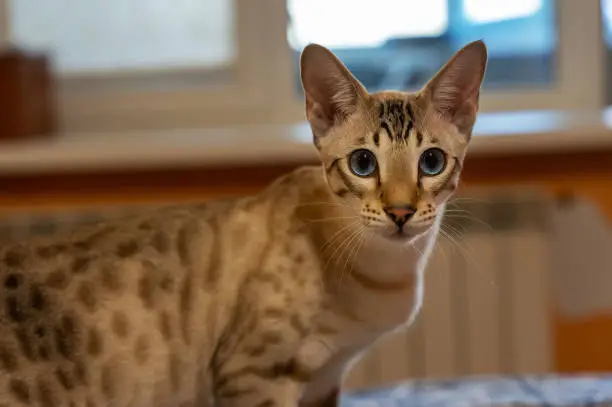
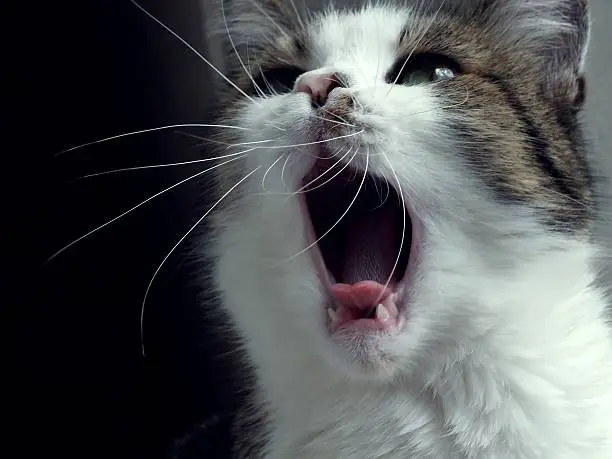
The Abyssinian cat is one of the oldest, most elegant, and most recognizable cat breeds in the world. Known for its sleek body, ticked coat, and almost wild-looking appearance, this breed often captures attention at first glance—and keeps it through its lively, intelligent personality.
If you’ve ever seen a cat that looks like a miniature wild jungle feline but behaves like a curious, affectionate companion, there’s a good chance it was an Abyssinian.
What is an Abyssinian cat?
An Abyssinian is a medium-sized domestic cat breed known for its:
- Distinctive ticked coat pattern (each hair has multiple color bands)
- Athletic and muscular body
- Extremely active and playful personality
- High intelligence and curiosity
Despite their wild appearance, Abyssinians are fully domesticated and thrive in loving home environments.
Why Abyssinians are one of the most popular cat breeds
Abyssinians consistently rank among the most admired breeds worldwide due to their unique combination of traits:
- 🧠 Highly intelligent – quick learners and problem solvers
- 🐾 Extremely active – always moving, climbing, or exploring
- ❤️ Social but independent – affectionate without being overly clingy
- ✨ Striking appearance – wild aesthetic with a soft, elegant coat
Their personality makes them especially popular among people who want a cat with dog-like energy and engagement.
Brief overview of personality, looks, and popularity
| Trait | Description |
|---|---|
| Personality | Curious, playful, intelligent |
| Activity Level | Very high |
| Grooming Needs | Low |
| Social Behavior | Friendly but independent |
| Appearance | Sleek, ticked coat, almond eyes |
Abyssinians are often described as the “athletes of the cat world” because they never seem to sit still for long.
Quick mention of origins and uniqueness
The exact origin of the Abyssinian cat is still debated, but many experts believe the breed has ancient roots possibly linked to Egyptian cats. This gives them an almost mythical reputation among cat lovers.
What truly makes them unique is their ticked coat pattern, which creates a shimmering, multi-toned effect—something rarely seen in other breeds.
2. What is an Abyssinian Cat?
The Abyssinian is not just a pet—it is a recognized pedigree cat breed with a well-documented standard in international feline organizations.
Scientific/breed classification overview
Although domestic cats do not have a strict scientific species breakdown like wild animals, Abyssinians are classified under:
- Species: Felis catus
- Breed Type: Domestic shorthair (ticked coat variety)
- Category: Natural breed (not artificially engineered hybrid)
They are considered a natural breed, meaning they developed gradually rather than being created through heavy crossbreeding programs.
Recognition by cat associations (CFA, TICA)
The Abyssinian is officially recognized by all major cat registries, including:
- 🏆 CFA (Cat Fanciers’ Association)
- 🏆 TICA (The International Cat Association)
- 🏆 FIFe (Fédération Internationale Féline)
These organizations maintain strict breed standards, ensuring that Abyssinians maintain their signature traits such as:
- Ticked coat pattern
- Slender, muscular body
- Large, expressive ears
- Almond-shaped eyes
Basic breed identity and global popularity
Today, Abyssinians are found all over the world and are especially popular in:
- United States
- United Kingdom
- Australia
- Parts of Europe
They are often ranked among the top 10 most intelligent cat breeds, which contributes significantly to their popularity.
Unlike many breeds that are purely ornamental or calm lap cats, Abyssinians are chosen by owners who want:
- Interaction
- Activity
- Mental engagement
- A “living personality” in the home
3. History and Origin of Abyssinian Cats
The history of the Abyssinian cat is one of the most fascinating and debated topics in feline genetics.
Ancient origins and historical theories (Egyptian connection myths)
One of the most popular theories suggests that Abyssinians are descendants of the sacred cats of ancient Egypt.
This belief is based on:
- Similar appearance to cats in Egyptian artwork
- Their graceful, slender bodies
- Their alert and regal posture
Some even call them the “Pharaoh’s cat,” although there is no definitive proof connecting them directly to ancient Egyptian lineages.
Another theory suggests origins in Southeast Asia or coastal regions of the Indian Ocean, based on genetic and historical trade routes.
Development in modern cat breeding
The modern Abyssinian breed began to take shape in the 19th century, when cats resembling Abyssinians were brought to Europe.
Early breeding efforts focused on:
- Preserving the ticked coat pattern
- Enhancing body elegance
- Standardizing temperament and behavior
By selective breeding, the Abyssinian became more refined and consistent in appearance.
Introduction to Europe and America
Abyssinians were first introduced to England in the late 1800s and quickly gained attention in cat shows.
Later, the breed spread to:
- United States (early 20th century)
- Canada
- Australia
In America, breeders refined the Abyssinian further, creating a slightly more modern look compared to early European lines.
Evolution of breed standards
Over time, cat associations developed strict breed standards that define the Abyssinian today:
Key standardized traits include:
- Medium athletic body
- Warm-toned ticked coat
- Large ears set apart
- Almond-shaped eyes in gold or green shades
These standards ensure consistency while preserving the breed’s natural elegance.
Keyword focus: Abyssinian cat origin, history of Abyssinian breed
The Abyssinian cat origin remains partly mysterious, but its documented history shows a breed that evolved from natural feline populations into a refined domestic companion.
4. Physical Characteristics of Abyssinian Cats
Abyssinians are instantly recognizable due to their sleek, wild-like appearance combined with a refined domestic structure.
4.1 Size and Body Structure
Abyssinians are medium-sized cats, but their body gives them a much more athletic impression.
Key physical traits:
- Lean but muscular frame
- Long legs relative to body size
- Fine bone structure
- Agile movement and strong jumping ability
They are often compared to miniature wild cats because of their posture and agility.
4.2 Coat and Color Variations
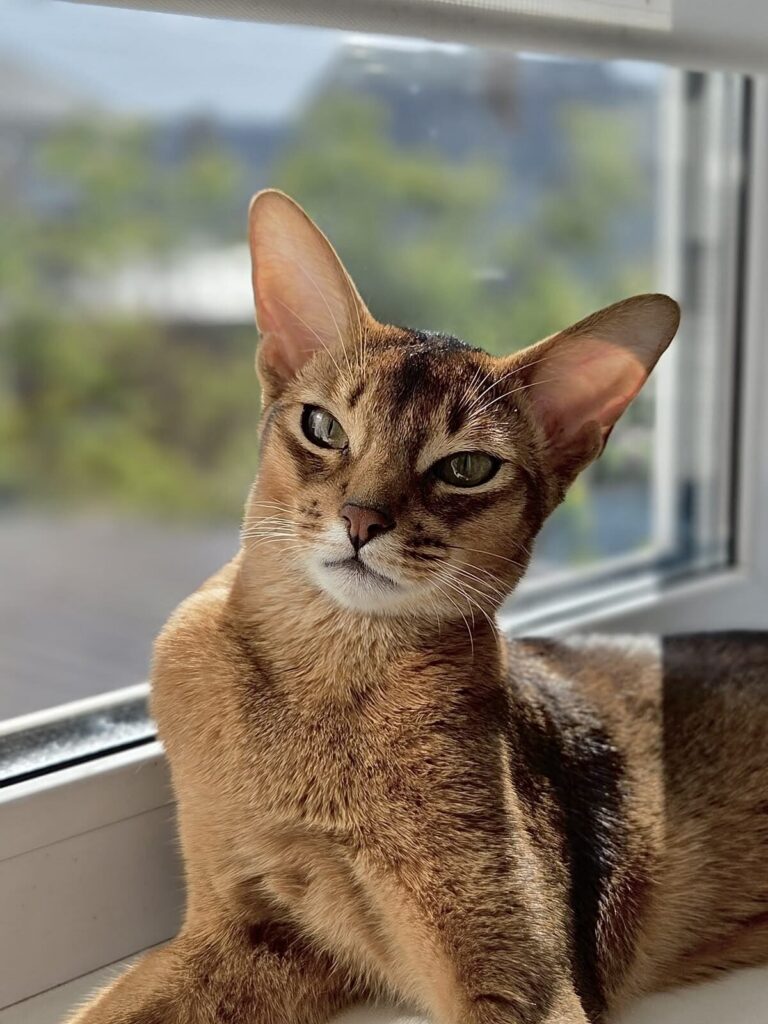
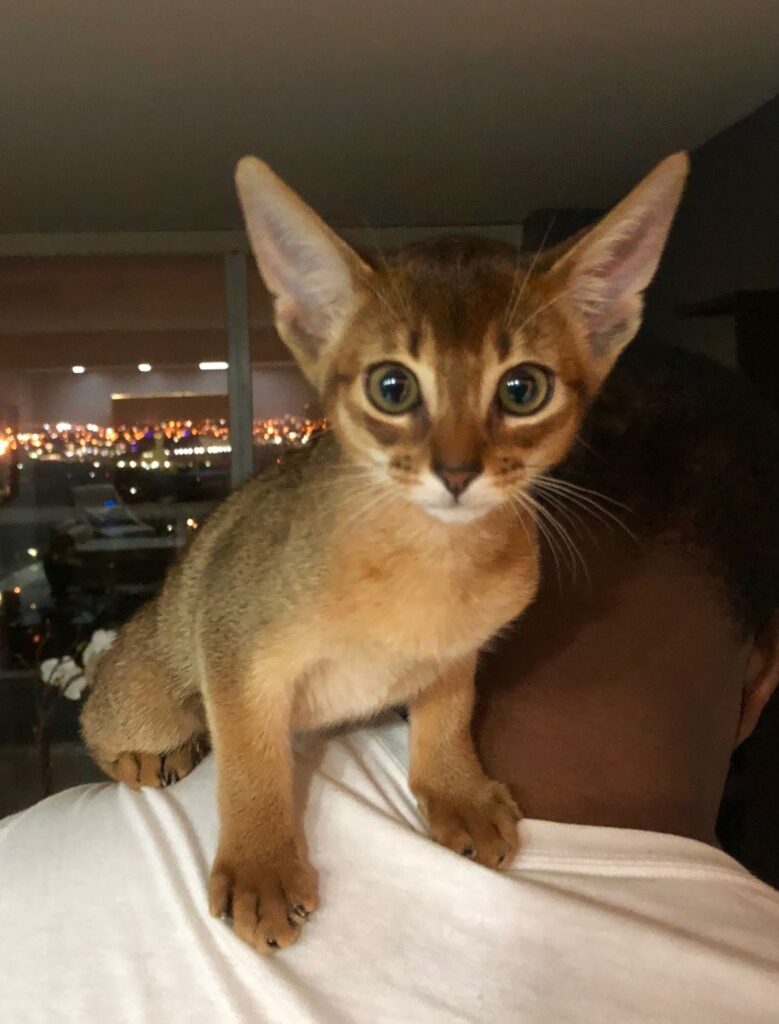
The most iconic feature of the Abyssinian is its ticked coat, also known as agouti patterning.
Instead of stripes or spots, each hair contains multiple color bands, creating a shimmering effect.
Common coat colors include:
| Color Type | Description |
|---|---|
| Ruddy | Warm reddish-brown base with black ticking |
| Red (Sorrel) | Cinnamon-copper tone |
| Blue | Soft grey-blue shade |
| Fawn | Light beige with warm undertones |
| Cinnamon | Reddish-brown with chocolate tones |
This coat is short, fine, and low-shedding, making grooming easier compared to long-haired breeds.
4.3 Eyes and Facial Features
Abyssinians have a very expressive face that adds to their charm.
Key facial traits:
- Large almond-shaped eyes
- Eye colors often include gold, green, or hazel
- Large, forward-facing ears that give an alert appearance
- Slightly wedge-shaped head structure
Their facial expression often looks like they are always observing and analyzing their surroundings.
4.4 Lifespan and Growth Pattern
Abyssinians are generally healthy cats with a relatively long lifespan.
Lifespan overview:
- Average: 12–15 years
- Well-cared individuals: 15–18+ years
Growth stages:
- Kitten (0–6 months): Extremely playful and curious
- Adolescent (6–18 months): High energy development phase
- Adult (1–5 years): Peak physical activity and intelligence
- Senior (7+ years): Slightly calmer but still active
5. Personality and Temperament of Abyssinian Cats
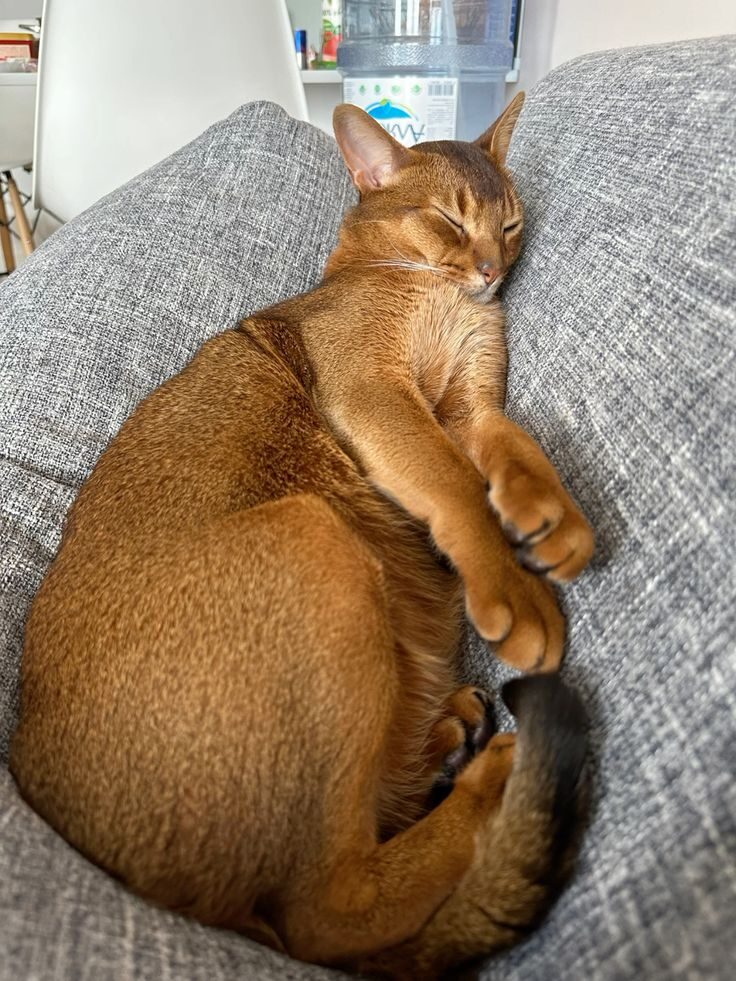
The Abyssinian cat personality is one of the most distinctive among all domestic breeds. If you imagine a cat that behaves like a mix of a curious child, an athlete, and a thinker, you’re very close to understanding an Abyssinian.
They are not the typical “sit on the couch all day” type of cat. Instead, they are constantly observing, exploring, and interacting with their environment.
Highly active and energetic nature
Abyssinians are famously energetic. They:
- Run, jump, and climb frequently
- Rarely stay still for long periods
- Prefer movement-based play over passive sitting
Their energy level is often compared to that of a kitten that never fully grows up in spirit.
Intelligent and curious behavior
One of the strongest traits of this breed is intelligence.
Abyssinians:
- Quickly learn routines
- Observe human behavior closely
- Figure out how objects work (doors, cabinets, toys)
- Enjoy puzzle toys and challenges
They are often considered one of the smartest cat breeds in the world.
Social but independent traits
Unlike overly clingy breeds, Abyssinians maintain a healthy balance:
- They enjoy human company
- But also like exploring alone
- They choose interaction rather than demanding it constantly
This makes them ideal for owners who want a friendly but not overly dependent companion.
Playful and interactive personality
Abyssinians are extremely playful throughout their lives.
They love:
- Fetch-style games
- Chasing moving objects
- Interactive toys
- Climbing furniture or cat trees
Many owners describe them as “dog-like cats” because of their playful engagement.
Bonding with humans
Even though they are independent, Abyssinians do form strong emotional bonds.
They often:
- Follow their owners around the house
- Sit nearby rather than on laps
- Observe daily activities closely
- Show affection through presence rather than constant cuddling
They prefer companionship over isolation, making them unsuitable for homes where they are left alone for long hours.
6. Behavior and Intelligence
Abyssinians are widely regarded as one of the most intelligent cat breeds, and their behavior reflects that reputation.
One of the smartest cat breeds
Their intelligence shows in everyday actions:
- Opening doors or cabinets
- Learning feeding schedules
- Recognizing voices and commands
- Adapting quickly to new environments
They are often compared to breeds like the Bengal and Siamese in cognitive ability.
Problem-solving abilities
Abyssinians love challenges. If something is blocked or closed, they will try to figure it out.
Examples include:
- Finding hidden treats
- Solving puzzle feeders
- Escaping simple enclosures (if bored)
This makes them entertaining but also requires mental stimulation to prevent boredom.
Love for climbing and exploring
Climbing is not optional for Abyssinians—it is essential.
They naturally:
- Climb shelves, furniture, and curtains
- Explore high places for observation
- Prefer elevated resting spots
This behavior comes from their instinct to observe their surroundings from above.
Attention-seeking behavior
While not overly clingy, Abyssinians do enjoy attention in their own way.
They may:
- Bring toys to their owners
- Nudge for interaction
- Sit near workspaces or screens
- Follow owners from room to room
They thrive in environments where they are mentally included in daily life.
Trainability and responsiveness
Due to their intelligence, Abyssinians are:
- Easy to train compared to many cats
- Responsive to positive reinforcement
- Capable of learning routines quickly
They can even learn simple commands like:
- Come
- Sit
- Fetch
- No (with consistency)
7. Abyssinian Cat Care Guide
Caring for an Abyssinian is not difficult in terms of grooming, but it does require attention, interaction, and structure.
7.1 Daily Care Requirements
Exercise needs
Abyssinians need a high level of physical activity daily.
Recommended activities:
- 2–3 play sessions per day
- Interactive toys
- Climbing structures
- Running and chasing games
Without exercise, they may become bored or destructive.
Mental stimulation
Mental stimulation is just as important as physical activity.
You can provide it through:
- Puzzle feeders
- New toys rotation
- Training sessions
- Window perches for observation
A bored Abyssinian is often a mischievous Abyssinian.
7.2 Grooming Needs
One of the easiest parts of owning this breed is grooming.
Grooming highlights:
- Short, fine coat
- Minimal shedding compared to long-haired breeds
- No matting issues
Basic grooming routine:
- Weekly brushing (once or twice)
- Occasional nail trimming
- Ear cleaning when needed
This makes them ideal for owners who want a low-maintenance grooming cat.
7.3 Feeding and Diet
Abyssinians require a high-quality, protein-rich diet to support their active lifestyle.
Recommended diet components:
- High-protein dry or wet food
- Lean meats (chicken, turkey, fish)
- Balanced fat intake for energy
- Limited carbohydrates
Feeding schedule and portion control
| Age | Feeding Frequency |
|---|---|
| Kitten | 3–4 meals/day |
| Adult | 2 meals/day |
| Senior | 2–3 smaller meals/day |
Because they are active, Abyssinians may burn calories quickly, but portion control is still important to avoid obesity.
8. Health Issues in Abyssinian Cats
Abyssinians are generally healthy, but like all purebred cats, they may be prone to certain genetic conditions.
Common genetic conditions
🧬 Progressive Retinal Atrophy (PRA)
- Affects eyesight over time
- Can lead to gradual vision loss
- Responsible breeders test for this condition
🧬 Kidney issues
- Some lines may be prone to renal problems
- Early detection is important through vet checkups
🧬 Dental problems
- Gum disease or plaque buildup
- Requires regular dental care and cleaning
Preventive healthcare tips
To keep an Abyssinian healthy:
- Schedule annual vet visits
- Maintain vaccination schedules
- Provide balanced diet
- Ensure regular exercise
Regular vet checkups importance
Routine veterinary care helps:
- Detect early diseases
- Monitor weight and nutrition
- Prevent long-term complications
9. Exercise and Activity Requirements
Abyssinians are not couch potatoes—they are athletic explorers.
High energy levels explained
This breed has:
- Fast metabolism
- Strong muscular structure
- High curiosity drive
They need constant movement to stay balanced.
Indoor play recommendations
Ideal indoor activities:
- Laser pointer games
- Feather wand chasing
- Hide-and-seek games
- Fetch training
Toys and enrichment ideas
Best toys include:
- Puzzle feeders
- Moving robotic toys
- Balls and tunnels
- Hanging toys
Importance of climbing structures
Abyssinians love vertical space.
Essential items:
- Cat trees
- Wall shelves
- Window perches
These structures help them:
- Burn energy
- Feel safe
- Observe surroundings
10. Training an Abyssinian Cat
Training an Abyssinian is easier than many expect because of their intelligence.
Litter training ease
Most Abyssinians:
- Learn litter training quickly
- Prefer clean litter boxes
- Adapt easily to indoor environments
Basic command training
They can learn:
- Name recognition
- Recall commands
- Simple tricks like “sit” or “fetch”
Training works best with:
- Positive reinforcement
- Treat rewards
- Short, engaging sessions
Leash training possibilities
Some Abyssinians can be leash-trained due to their curiosity.
However:
- Start early (kitten stage preferred)
- Use comfortable harness
- Gradual outdoor exposure
Behavioral correction techniques
Because they are smart, punishment does not work well.
Instead:
- Redirect behavior
- Provide alternatives (toys, climbing space)
- Reward good behavior
11. Living Environment Requirements
Abyssinians are not “low-energy background pets.” They are active, observant, and constantly engaged with their surroundings. Because of this, their environment plays a huge role in their happiness.
Best home setup for Abyssinians
An ideal home for an Abyssinian should include:
- Multiple climbing structures (cat trees, shelves)
- Safe high resting spots
- Interactive toys placed around the house
- Window access for outdoor observation
- Separate feeding and litter areas
They love environments where they can:
- Move freely
- Climb vertically
- Observe everything happening around them
Indoor vs outdoor safety considerations
Abyssinians are naturally curious, which makes outdoor access risky.
| Environment | Safety Level | Recommendation |
|---|---|---|
| Indoor only | ⭐⭐⭐⭐⭐ | Best and safest option |
| Supervised outdoor (leash) | ⭐⭐⭐⭐ | Good with training |
| Free outdoor roaming | ⭐⭐ | Not recommended |
Because they are intelligent and quick, they may easily get lost or injured outdoors.
Apartment suitability
Yes—Abyssinians can live in apartments, but only if:
- They get daily exercise
- They have vertical space (cat trees/shelves)
- They are mentally stimulated
Without stimulation, apartment life can feel restrictive for them.
Ideal environment conditions
They thrive in homes that provide:
- Social interaction
- Daily play sessions
- Predictable routine
- Clean, enriched space
They dislike boredom and isolation.
12. Abyssinian Cats with Families and Other Pets
Abyssinians are generally friendly, adaptable, and social—but their energetic nature must be understood.
Compatibility with children
Abyssinians are usually great with children because:
- They enjoy playing
- They are active and tolerant
- They bond through interaction
However:
- Very small children should be supervised
- Rough handling should be avoided
They prefer respectful, playful interaction.
Behavior with dogs
Abyssinians often get along well with dogs, especially:
- Calm dogs
- Socialized puppies
- Non-aggressive breeds
They may even play chase games with dog companions.
Multi-pet household adaptability
They can live with other cats, but:
- They prefer active companions
- Territorial conflicts are rare if introduced properly
- They dislike passive or aggressive pets
Socialization tips
To ensure harmony:
- Introduce pets gradually
- Use scent swapping techniques
- Provide separate feeding areas
- Monitor early interactions
Proper socialization makes them excellent multi-pet companions.
13. Abyssinian Cat Price and Availability
The price of an Abyssinian varies widely depending on location, breeder quality, and lineage.
Price range in different regions
| Region | Price Range |
|---|---|
| USA | $1,000 – $2,500 |
| UK | £800 – £1,500 |
| Europe | €900 – €2,000 |
| South Asia | Varies widely (import-based pricing) |
Show-quality kittens can cost significantly more.
Adoption vs breeder comparison
| Option | Pros | Cons |
|---|---|---|
| Adoption | Lower cost, saves a life | Limited breed guarantee |
| Breeder | Purebred, health history | Expensive |
Adoption is often overlooked but can be very rewarding.
Factors affecting cost
Several factors influence price:
- Pedigree quality
- Coat color rarity (e.g., cinnamon or fawn)
- Breeder reputation
- Health screening results
- Location and import fees
14. How to Choose a Healthy Abyssinian Kitten
Choosing the right kitten is essential for long-term health and behavior.
Signs of a responsible breeder
A good breeder will:
- Provide health certificates
- Show parent cats
- Offer vaccination records
- Allow home visits or virtual checks
- Ask questions about your home
Health checks before adoption
Look for:
- Clear, bright eyes
- Clean ears
- Healthy weight (not too thin or overweight)
- Active and playful behavior
- No breathing issues
Red flags to avoid scams
Avoid breeders who:
- Refuse to show parents
- Sell kittens too young
- Offer unusually low prices
- Lack documentation
- Keep animals in poor conditions
Vaccination and documentation
A healthy Abyssinian kitten should come with:
- Vaccination records
- Deworming history
- Veterinary health certificate
- Microchip details (in some countries)
15. Abyssinian Cat vs Other Breeds (Comparison Section)
Understanding differences helps you decide if an Abyssinian is right for you.
15.1 Abyssinian vs Siamese
| Trait | Abyssinian | Siamese |
|---|---|---|
| Energy Level | Very high | High |
| Vocalization | Moderate | Very vocal |
| Personality | Curious, playful | Social, talkative |
| Coat | Ticked short coat | Color-point short coat |
Siamese cats are more vocal, while Abyssinians are more physically active.
15.2 Abyssinian vs Bengal
| Trait | Abyssinian | Bengal |
|---|---|---|
| Appearance | Elegant, ticked coat | Wild, spotted coat |
| Energy | High | Very high |
| Behavior | Curious, social | More intense, adventurous |
| Maintenance | Low | Moderate |
Bengals are more wild-looking and slightly more demanding in stimulation.
15.3 Abyssinian vs Somali Cat (long-haired variant)
The Somali cat is essentially a long-haired version of the Abyssinian.
| Trait | Abyssinian | Somali |
|---|---|---|
| Coat | Short | Long & fluffy |
| Grooming | Easy | Moderate |
| Appearance | Sleek | Fox-like fluffy tail |
| Temperament | Active | Active |
16. Interesting Facts About Abyssinian Cats
Here are some fascinating facts about this unique breed:
- 🏺 They are often linked to ancient Egyptian cats (though not confirmed)
- ✨ Their coat creates a “ticking effect” that reflects light beautifully
- 🐾 They are one of the most dog-like cat breeds
- 🧠 Known for exceptional memory and learning ability
- 📸 Frequently used in advertisements due to their striking appearance
17. Common Myths About Abyssinian Cats
Let’s clear up some misunderstandings.
Myth vs Reality
- ❌ Myth: Abyssinians are wild or aggressive
✔ Reality: They are playful and energetic, not aggressive - ❌ Myth: They don’t bond with humans
✔ Reality: They form strong, loyal bonds - ❌ Myth: They are low-maintenance pets overall
✔ Reality: Grooming is easy, but they need high attention and activity
18. Pros and Cons of Owning an Abyssinian Cat
Pros
- Highly intelligent
- Extremely playful and engaging
- Low grooming needs
- Beautiful and unique appearance
- Social and interactive
Cons
- Very high energy needs
- Can become bored easily
- Not ideal for inactive households
- Needs attention and stimulation
19. Frequently Asked Questions (FAQs)
Are Abyssinian cats good pets?
Yes, they are excellent pets for active individuals or families who can match their energy.
Do Abyssinian cats shed a lot?
No, they shed minimally compared to many other breeds.
Are Abyssinians hypoallergenic?
Not completely, but some people with mild allergies tolerate them better due to their short coat.
How long do Abyssinian cats live?
Typically 12–15 years, sometimes longer with good care.
Are Abyssinians expensive?
Yes, they are considered a premium purebred cat.
Do they like being held?
Not always. They prefer being near you rather than being constantly carried.
20. Conclusion
The Abyssinian cat is a remarkable blend of elegance, intelligence, and energy. With its ticked coat, athletic body, and endlessly curious personality, it stands out as one of the most fascinating domestic cat breeds in the world.
They are not just pets—they are active companions that interact, explore, and engage with life constantly.
If you are looking for:
- A quiet lap cat → this may not be the best choice
- A lively, intelligent, interactive companion → Abyssinian is perfect