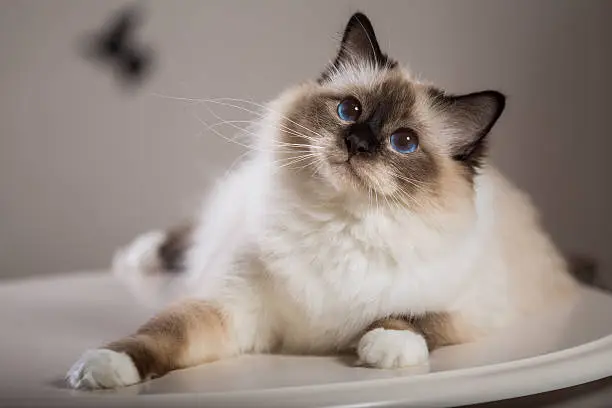
The Birman cat is one of the most elegant and affectionate cat breeds in the world. Famous for its deep sapphire-blue eyes, silky coat, and distinctive white “gloves” on each paw, the Birman combines beauty with a calm and loving personality. Often referred to as the Sacred Cat of Burma, this breed has captivated cat lovers for generations with its fascinating history and gentle nature.
Unlike some long-haired cats that demand extensive grooming, the Birman has a soft, single-layer coat that is surprisingly easy to maintain. Its friendly temperament makes it an excellent choice for families, seniors, singles, and homes with other pets. Whether curled up beside you on the couch or following you from room to room, a Birman enjoys being close to its favorite people without being overly demanding.
If you’re considering bringing one into your home, this guide covers everything you need to know—from the breed’s history and appearance to its personality, care requirements, and ownership costs.
Helpful resources: Learn more about feline health through the American Association of Feline Practitioners (AAFP), explore official breed standards at The International Cat Association (TICA), and review feline nutrition guidance from WSAVA Global Nutrition Guidelines.
Birman Cat at a Glance (Quick Facts)
| Feature | Details |
|---|---|
| Origin | France (inspired by the Burmese legend) |
| Breed Type | Long-Haired Domestic Cat |
| Weight | 6–12 lbs |
| Height | 8–10 inches |
| Lifespan | 12–16 years |
| Coat | Medium-long, silky, single coat |
| Colors | Seal, Blue, Chocolate, Lilac, Red, Cream, Tortie |
| Eye Color | Deep Sapphire Blue |
| Temperament | Gentle, affectionate, intelligent |
| Grooming Needs | Moderate |
| Exercise Needs | Moderate |
| Shedding | Moderate |
| Good with Children | Excellent |
| Good with Dogs | Yes |
| Hypoallergenic | No |
| Recognition | CFA, TICA, GCCF, FIFe |
What Is a Birman Cat?
The Birman is a beautiful semi-longhaired cat known for its affectionate personality, luxurious coat, and striking blue eyes. Although its appearance is regal, the Birman is anything but aloof. These cats are friendly, social, and thrive on companionship.
They are often described as the perfect balance between playful and relaxed. Birmans enjoy interactive games and spending time with their families but are equally happy curling up beside their favorite person for a peaceful nap.
Overview of the Birman Breed
The Birman is admired for its combination of elegance and gentle temperament.
Some of its most recognizable traits include:
- Brilliant sapphire-blue eyes
- Silky, medium-long coat
- Distinctive white-gloved paws
- Calm and affectionate personality
- Moderate activity level
- Excellent family companion
Unlike highly energetic breeds, Birmans enjoy playtime but are generally content with a quieter lifestyle.
Why Is It Called the Sacred Cat of Burma?
The Birman is surrounded by one of the most captivating legends in the cat world.
According to folklore, sacred temple cats lived alongside priests in ancient Burma. One faithful temple cat was said to have been transformed by a golden goddess after protecting its master. The cat’s eyes turned brilliant blue, its coat became golden, and its paws turned pure white as a symbol of purity.
Although this story is mythical, it gave rise to the breed’s nickname:
The Sacred Cat of Burma
This enchanting legend continues to add to the Birman’s charm and popularity.
Is the Birman a Purebred Cat?
Yes.
The Birman is a recognized purebred cat maintained through carefully managed breeding programs.
Responsible breeders work to preserve important characteristics such as:
- Coat quality
- White glove markings
- Blue eyes
- Gentle temperament
- Healthy bloodlines
Most reputable breeders register their cats with recognized cat associations.
Birman vs Mixed-Breed Cats
Although mixed-breed cats can sometimes resemble Birmans, true Birman cats possess a combination of unique characteristics that distinguish them from other long-haired breeds.
These include:
- White-gloved feet
- Sapphire-blue eyes
- Color-point coat
- Silky single coat
- Gentle personality
Registration papers help confirm a kitten’s pedigree.
History and Origin of the Birman Cat
The Birman’s history blends legend, mystery, and modern breeding.
The Legend of the Sacred Cat of Burma
According to tradition, Birmans lived in sacred temples in Burma (now Myanmar).
The story tells of a devoted temple cat whose appearance changed after a divine blessing, giving the breed its famous:
- Blue eyes
- White paws
- Golden coat
Although historians cannot verify this legend, it remains an important part of the breed’s identity.
Early Development in France
The modern Birman breed was actually developed in France during the early 20th century.
French breeders selectively developed cats with the desired:
- Color-point coat
- White gloves
- Gentle temperament
- Luxurious coat
These breeding efforts established the Birman as the breed we recognize today.
World War II and Breed Recovery
Like many pedigree breeds, the Birman nearly disappeared during World War II.
Only a small number of breeding cats survived.
Dedicated breeders carefully rebuilt the population by selectively breeding the remaining cats while maintaining the Birman’s defining characteristics.
Their efforts successfully restored the breed over the following decades.
Modern Birman Breeding
Today’s Birman breeders focus on producing healthy cats with:
- Excellent temperament
- Strong genetics
- Proper coat markings
- Breed-standard body structure
Ethical breeding programs also emphasize health testing and early kitten socialization.
Recognition by Major Cat Associations
The Birman is recognized worldwide by leading feline organizations.
CFA
The Cat Fanciers’ Association (CFA) recognizes the Birman and maintains official breed standards for exhibitions.
TICA
The International Cat Association (TICA) recognizes Birmans and provides detailed breed standards covering structure, coat, and temperament.
GCCF
The Governing Council of the Cat Fancy (GCCF) recognizes Birman cats in the United Kingdom.
FIFe
The Fédération Internationale Féline (FIFe) also recognizes the Birman throughout many European countries.
Birman Cat Appearance
The Birman combines strength with elegance.
Everything from its muscular body to its silky coat contributes to its graceful appearance.
Overall Body Structure
The Birman has a medium-to-large frame that feels solid without appearing heavy.
Typical features include:
- Muscular body
- Balanced proportions
- Strong legs
- Broad chest
- Graceful movement
Unlike slender breeds, Birmans have a more substantial build while maintaining elegance.
Medium to Large Body
Adult Birmans have:
- Strong shoulders
- Rounded body
- Medium bone structure
- Well-developed muscles
Their balanced proportions contribute to their distinctive appearance.
Muscular Build
Despite their gentle personality, Birmans possess:
- Good muscle tone
- Strong legs
- Excellent balance
They are agile enough to climb cat trees while remaining calm indoors.
Balanced Proportions
Everything about the Birman’s body appears harmonious.
No single feature dominates its appearance, giving the breed an elegant, symmetrical look.
Elegant Posture
Whether walking or resting, the Birman carries itself with remarkable grace.
Its calm movements add to its regal appearance.
Head Shape
The Birman’s face is soft, rounded, and expressive.
Broad Rounded Head
The head features:
- Rounded contours
- Broad forehead
- Full cheeks
This contributes to the breed’s sweet expression.
Roman Nose
A gentle Roman nose profile distinguishes the Birman from several other color-point breeds.
Strong Chin
A firm chin creates excellent facial balance and complements the rounded head.
Full Cheeks
Adult Birmans often develop fuller cheeks that enhance their soft, friendly appearance.
Eyes
Perhaps no feature is more admired than the Birman’s eyes.
Sapphire Blue Eyes
The breed standard calls for deep sapphire-blue eyes, one of the Birman’s most recognizable characteristics.
These brilliant blue eyes create a striking contrast against the color-point coat.
Round Shape
Birman eyes are:
- Large
- Rounded
- Expressive
- Well-spaced
Their warm expression perfectly matches the breed’s affectionate personality.
Ears
The ears are medium-sized and proportionate to the head.
Characteristics include:
- Rounded tips
- Wide placement
- Slight forward tilt
This creates an alert but gentle expression.
Tail
The Birman’s tail is:
- Medium in length
- Well-furnished
- Gracefully plumed
When carried naturally, it complements the cat’s balanced body.
Birman Cat Coat
One of the Birman’s greatest attractions is its luxurious coat.
Fortunately, maintaining it is easier than many owners expect.
Coat Texture
The Birman’s fur feels:
- Silky
- Soft
- Smooth
- Light
Unlike dense double-coated breeds, the Birman’s coat rarely becomes heavily tangled.
Silky Single Coat
Unlike Persians or Maine Coons, Birmans have a single-layer coat.
This means:
- Less matting
- Easier brushing
- Reduced grooming time
Weekly brushing is usually sufficient to maintain a healthy coat.
Seasonal Shedding
Birmans shed moderately throughout the year.
Shedding often increases during seasonal coat changes.
Regular brushing helps remove loose fur and reduce hairballs.
Coat Development with Age
Birman kittens are born almost entirely white.
Their color points gradually develop over the first several months.
The coat typically reaches full maturity by around 2–3 years of age.
Why the Coat Rarely Mats
Because the Birman lacks a dense undercoat, tangles are much less common than in many other long-haired breeds.
Routine grooming keeps the coat smooth and healthy.
Birman Cat Colors
Birmans are recognized in several beautiful color variations.
Seal Point Birman
The classic Seal Point features:
- Cream-colored body
- Dark brown points
- Deep blue eyes
This remains the most recognizable Birman color.
Blue Point Birman
Blue Points display:
- Cool bluish-gray points
- Soft ivory body
- Elegant contrast
Their appearance is refined and highly popular.
Chocolate Point Birman
Chocolate Points have:
- Warm ivory coat
- Milk-chocolate markings
- Bright sapphire eyes
Their softer coloring gives them a particularly gentle appearance.
Lilac Point Birman
Lilac Points feature:
- Frosty gray points
- Pale cream body
- Delicate overall coloring
This is one of the lighter recognized varieties.
Red Point Birman
Red Points display warm orange-red points that deepen as the cat matures.
Cream Point Birman
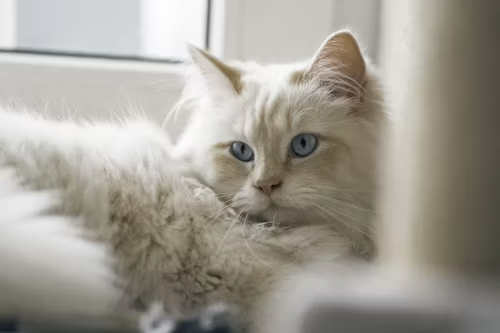
Cream Points have:
- Pale cream markings
- Soft ivory body
- Gentle color contrast
Tortie Point Birman
Tortie Points combine multiple colors within the point markings, creating a unique appearance.
Each Tortie Birman has its own individual pattern.
Lynx Point Birman
Lynx Points feature subtle tabby striping within the point coloration.
These delicate markings add extra character while preserving the breed’s elegant appearance.
Birman Cat Markings
One of the most recognizable features of the Birman cat is its beautiful color-point pattern paired with perfectly white paws. These markings make the breed instantly recognizable.
White Gloves
The Birman’s front paws feature neat white “gloves.”
According to breed standards, the gloves should:
- Be pure white
- Cover only the feet
- End evenly across both front legs
- Be symmetrical
Perfect gloves are highly valued in cat shows.
White Laces
On the back legs, the white markings extend upward into pointed shapes known as laces.
Ideal laces should:
- Form an inverted “V”
- Reach a similar height on each leg
- Be symmetrical
These elegant markings are unique to the Birman breed.
Color Points
Like Siamese and Himalayan cats, Birmans have darker coloration on their:
- Face
- Ears
- Legs
- Tail
The body remains lighter in color, creating an attractive contrast.
Symmetry Standards
Show-quality Birmans are judged on the balance of their markings.
Breeders aim for:
- Matching gloves
- Even laces
- Well-defined color points
- Consistent coat color
Pet-quality cats may have slight variations while still making wonderful companions.
Show-Quality Markings
Cats intended for exhibition should display:
- Perfect white gloves
- Balanced laces
- Deep blue eyes
- Rich point coloration
- Excellent coat condition
Birman Cat Size
The Birman is considered a medium-to-large breed with a sturdy yet elegant body.
Male Birman Size
Adult males generally weigh 10–12 pounds (4.5–5.5 kg).
They often develop:
- Broader shoulders
- Larger heads
- Heavier bone structure
Female Birman Size
Females typically weigh 6–10 pounds (2.7–4.5 kg).
Although slightly smaller, they retain the same graceful appearance.
Birman Growth Chart
| Age | Average Weight |
|---|---|
| 2 Months | 2–3 lbs |
| 4 Months | 4–5 lbs |
| 6 Months | 5–7 lbs |
| 12 Months | 7–10 lbs |
| Adult | 6–12 lbs |
Most Birmans continue maturing until they are around 2 to 3 years old.
Full-Grown Birman Cat
A healthy adult Birman has:
- Muscular frame
- Rounded body
- Medium-length legs
- Graceful movement
- Full, silky coat
Birman Cat Personality
The Birman is famous for its sweet, calm, and affectionate personality.
Gentle Nature
Birmans are exceptionally gentle and rarely display aggressive behavior.
They enjoy spending time with family members without being overly demanding.
Intelligence
These cats are intelligent enough to:
- Learn routines
- Solve puzzle toys
- Recognize their names
- Learn simple tricks
They enjoy interactive activities that challenge their minds.
Affection
Birmans form strong bonds with their owners.
Many enjoy:
- Sitting beside you
- Following you around the house
- Sleeping nearby
- Greeting you at the door
They are affectionate without being overly clingy.
Loyalty
The Birman often develops a close relationship with one or two favorite people while remaining friendly with everyone in the household.
Calm Temperament
Unlike highly active breeds, Birmans prefer a balanced lifestyle.
They enjoy:
- Quiet evenings
- Gentle play sessions
- Comfortable naps
- Relaxing with family
Playfulness
Although calm, Birmans remain playful throughout adulthood.
Favorite activities include:
- Feather toys
- Toy mice
- Puzzle feeders
- Chasing balls
- Interactive wand toys
Curiosity
Birmans enjoy exploring their surroundings but are generally less mischievous than some highly energetic breeds.
Vocalization Level
Birmans communicate with soft, pleasant voices.
Unlike Siamese cats, they rarely become excessively vocal.
Birman Cat Temperament
The Birman’s friendly nature makes it one of the best companion cats for many households.
Family Compatibility
Birmans thrive in loving homes where they receive daily attention and companionship.
Children
Their patient and gentle personality makes them excellent companions for respectful children.
They generally tolerate:
- Gentle handling
- Interactive games
- Family activities
Seniors
Birmans are wonderful pets for seniors because they are affectionate without requiring constant activity.
Dogs
Most Birmans adapt well to calm, cat-friendly dogs when introductions are handled gradually.
Other Cats
Birmans usually enjoy living with other friendly cats, especially if introduced slowly.
Strangers
Many Birmans greet visitors with curiosity rather than fear.
Early socialization helps build confidence.
Apartment Living
Their moderate activity level makes Birmans well suited for apartments.
Provide:
- Scratching posts
- Cat trees
- Interactive toys
- Window perches
Separation Tolerance
Although somewhat independent, Birmans generally prefer not to be left alone for long periods every day.
Interactive toys and companionship can help reduce loneliness.
Are Birman Cats Good Pets?
For many households, the answer is an enthusiastic yes.
Advantages
- Beautiful appearance
- Gentle temperament
- Easygoing personality
- Moderate grooming needs
- Good with children
- Usually good with dogs
- Adaptable to apartment living
Challenges
Potential owners should consider:
- Moderate shedding
- Need for companionship
- Regular brushing
- Purchase price from reputable breeders
Ideal Owners
The Birman is ideal for:
- Families
- Couples
- Seniors
- First-time cat owners
- Multi-pet households
First-Time Cat Owners
Because of their calm personality and relatively simple care needs, Birmans are among the best purebred cats for beginners.
Living with a Birman Cat
Indoor vs Outdoor
Keeping a Birman indoors is strongly recommended.
Indoor living helps protect against:
- Traffic
- Predators
- Disease
- Theft
For safe outdoor experiences, consider a secure catio or supervised harness walks.
Apartment Living
Birmans adapt exceptionally well to apartments when provided with:
- Daily playtime
- Vertical climbing spaces
- Comfortable resting areas
Multi-Pet Homes
Birmans usually enjoy sharing their home with:
- Other cats
- Cat-friendly dogs
Proper introductions encourage positive relationships.
Busy Families
Busy households can still be a good fit if someone spends quality time with the cat each day.
Quiet Households
Birmans appreciate peaceful environments and often become wonderful companions for quieter homes.
Seniors
Their affectionate and gentle personality makes them excellent companions for older adults.
Birman Kitten Guide
Choosing a Healthy Kitten
Healthy Birman kittens should be:
- Bright-eyed
- Curious
- Playful
- Well-socialized
- Clean and alert
Always purchase from reputable breeders or adopt through trusted rescue organizations.
Growth Stages
8–12 Weeks
- Weaned
- Learning social skills
- Becoming more playful
3–6 Months
- Rapid growth
- Increased curiosity
- Developing confidence
6–12 Months
- Continued muscle development
- Learning adult routines
- Growing independence
Socialization
Early exposure to:
- Different people
- Household sounds
- Grooming
- Veterinary visits
- Gentle handling
helps produce confident adult cats.
Vaccination Schedule
Your veterinarian may recommend:
- FVRCP
- Rabies
- FeLV (if appropriate)
Follow the vaccination schedule advised for your kitten.
First Veterinary Visit
Schedule a veterinary examination soon after bringing your kitten home.
The visit may include:
- Physical examination
- Vaccination review
- Parasite screening
- Nutrition advice
Bringing Your Kitten Home
Prepare your home with:
- Food bowls
- Water bowl or fountain
- Litter box
- Comfortable bed
- Carrier
- Scratching post
- Toys
Allow your kitten to adjust gradually by starting in a quiet room.
Birman Cat Care Guide
Although their coat is luxurious, Birmans are relatively easy to care for.
Grooming
Brushing
Brush your Birman 2–3 times each week to:
- Remove loose hair
- Prevent tangles
- Reduce hairballs
- Keep the coat shiny
Bathing
Bathing is only needed occasionally unless the cat becomes unusually dirty.
Nail Trimming
Trim nails every 2–3 weeks.
Ear Cleaning
Inspect ears monthly and clean them only when necessary using veterinarian-approved products.
Dental Care
Brush your Birman’s teeth 2–3 times weekly to help prevent dental disease.
Exercise
Although calmer than some breeds, Birmans still enjoy regular activity.
Daily exercise helps maintain:
- Healthy weight
- Muscle tone
- Mental health
Aim for 20–40 minutes of interactive play each day.
Daily Play
Favorite games include:
- Feather wands
- Ball chasing
- Toy mice
- Hide-and-seek
Cat Trees
Cat trees encourage climbing while providing secure resting places.
Interactive Toys
Excellent toy options include:
- Wand toys
- Motion toys
- Treat balls
- Soft plush toys
Rotate toys regularly to maintain interest.
Puzzle Games
Puzzle feeders stimulate natural problem-solving instincts while making mealtime more engaging.
Mental Stimulation
Mental exercise helps prevent boredom.
Clicker Training
Many Birmans enjoy learning:
- Sit
- Come
- High five
- Spin
Positive reinforcement produces the best results.
Food Puzzles
Puzzle feeders encourage natural hunting behaviors while slowing eating.
Indoor Games
Create fun indoor activities such as:
- Hidden treats
- Obstacle courses
- Climbing shelves
- Interactive play sessions
Birman Cat Diet
A balanced diet is essential for maintaining the Birman’s luxurious coat and healthy body condition.
Nutritional Requirements
Look for foods containing:
- High-quality animal protein
- Healthy fats
- Taurine
- Vitamins
- Minerals
- Omega-3 fatty acids
Wet vs Dry Food
| Wet Food | Dry Food |
|---|---|
| High moisture | Convenient |
| Supports hydration | Longer shelf life |
| Often higher in protein | Helps satisfy chewing instincts |
Many owners feed a combination of both.
High-Protein Diet
Protein supports:
- Lean muscle
- Healthy skin
- Glossy coat
- Overall energy
Homemade Diet
Homemade diets should only be fed under veterinary nutritional guidance to ensure they are complete and balanced.
Raw Diet
Commercially prepared raw diets may be appropriate for some cats but should be discussed with your veterinarian before switching.
Feeding Schedule
- Kittens: 3–4 meals daily
- Adults: 2 meals daily
- Seniors: Smaller meals if recommended by a veterinarian
Water Intake
Fresh water should always be available.
Many Birmans enjoy drinking from circulating pet fountains.
Foods to Avoid
Never feed:
- Chocolate
- Onions
- Garlic
- Grapes
- Raisins
- Alcohol
- Xylitol
- Caffeine
- Cooked bones
Best Food for Birman Cats
Kittens
Require nutrient-rich kitten food to support healthy growth.
Adults
Benefit from balanced diets with high-quality animal protein.
Seniors
Senior diets often support:
- Joint health
- Kidney health
- Weight management
Indoor Cats
Indoor formulas may help maintain a healthy body weight while reducing hairballs.
Weight Management
Monitor portion sizes and encourage daily exercise to prevent obesity.
Sensitive Stomachs
Limited-ingredient diets may benefit some cats with digestive sensitivities.
Birman Cat Health
Birmans are generally healthy, but like all purebred cats, they can be predisposed to certain inherited conditions.
Common Health Problems
- Hypertrophic Cardiomyopathy (HCM)
- Polycystic Kidney Disease (PKD)
- Feline Infectious Peritonitis (FIP) awareness
- Obesity
- Dental disease
- Kidney disease
Routine veterinary checkups, preventive care, and obtaining kittens from responsible breeders who perform health testing can help reduce the risk of many health issues.
Birman Cat Lifespan
The Birman cat is generally a healthy breed with a long life expectancy when provided with proper nutrition, routine veterinary care, and a safe indoor environment.
Average Life Expectancy
Most Birman cats live between 12 and 16 years, although many reach 17–20 years with excellent care and favorable genetics.
Factors Affecting Longevity
Several factors influence a Birman’s lifespan:
- Genetics
- High-quality nutrition
- Healthy body weight
- Routine veterinary checkups
- Dental care
- Regular exercise
- Indoor lifestyle
- Mental stimulation
Choosing a kitten from a responsible breeder who performs genetic health testing can reduce the risk of inherited conditions.
Tips to Help Your Birman Live Longer
Help your Birman enjoy a long, healthy life by:
- Feeding a balanced, high-quality diet
- Maintaining a healthy weight
- Scheduling annual veterinary wellness exams
- Keeping vaccinations current
- Providing daily exercise and enrichment
- Brushing teeth regularly
- Grooming the coat consistently
- Keeping your cat indoors or in a secure outdoor enclosure
Birman Cat Training
Birmans are intelligent and eager to please, making them one of the easier cat breeds to train using positive reinforcement.
Litter Training
Most Birman kittens quickly learn proper litter box habits.
For success:
- Keep the litter box clean.
- Place it in a quiet, accessible location.
- Use unscented litter during training.
- Reward good habits with praise or treats.
Clicker Training
Clicker training is a fun way to teach your Birman new behaviors.
Popular commands include:
- Sit
- Come
- High five
- Spin
- Touch
Keep sessions short and rewarding to maintain your cat’s interest.
Leash Training
Many Birmans can learn to walk on a harness.
Training tips:
- Introduce the harness indoors.
- Reward calm behavior.
- Attach a lightweight leash.
- Practice in a safe, enclosed area before venturing outdoors.
Teaching Tricks
With patience, many Birmans can learn:
- Fetch
- Jump through hoops
- Ring a bell
- Respond to their name
- Target training
Mental challenges help prevent boredom and strengthen your bond.
Positive Reinforcement
Always reward desired behavior with:
- Treats
- Praise
- Playtime
- Affection
Avoid punishment, which can damage trust and increase anxiety.
Common Birman Cat Behavior Problems
Birmans are generally well-mannered, but some behaviors may develop if their physical or emotional needs aren’t met.
Scratching Furniture
Redirect scratching by providing:
- Sturdy scratching posts
- Cardboard scratchers
- Cat trees
- Scratching mats
Reward your cat for using appropriate scratching surfaces.
Separation Anxiety
Because Birmans are social cats, they may become lonely when left alone for extended periods.
Help reduce anxiety by:
- Providing interactive toys
- Leaving puzzle feeders available
- Maintaining a consistent routine
- Considering another compatible pet if appropriate
Excessive Meowing
Although not usually vocal, increased meowing can indicate:
- Hunger
- Loneliness
- Stress
- Illness
- Desire for attention
If the behavior changes suddenly, consult your veterinarian.
Hairballs
Longer coats naturally increase the risk of hairballs.
Reduce hairballs by:
- Brushing several times a week
- Feeding a balanced diet
- Encouraging adequate water intake
Biting During Play
Young Birmans sometimes nip while playing.
Teach appropriate play by:
- Using toys instead of hands
- Ending play if biting occurs
- Rewarding gentle behavior
Weight Gain
Because Birmans enjoy relaxing, they can gain excess weight without enough activity.
Prevent obesity through:
- Portion control
- Daily exercise
- Interactive play
- Routine weight monitoring
Birman Cat Grooming Schedule
| Grooming Task | Frequency |
|---|---|
| Brushing | 2–3 Times Weekly |
| Nail Trimming | Every 2–3 Weeks |
| Teeth Brushing | 2–3 Times Weekly |
| Ear Cleaning | Monthly |
| Eye Check | Weekly |
A regular grooming routine helps maintain the Birman’s beautiful coat and overall health.
Birman Cat Price
The cost of owning a Birman extends beyond the purchase price.
Birman Kitten Price
Typical prices include:
| Type | Estimated Price |
|---|---|
| Pet Quality | $800–$2,000 |
| Show Quality | $2,000–$3,500+ |
| Rare Bloodlines | $3,500+ |
Prices vary depending on pedigree, breeder reputation, location, and show potential.
Adult Birman Cost
Adult Birmans may be available through breeders or rehoming programs at lower prices than kittens.
Show-Quality Birman Price
Cats intended for exhibition often cost more because they meet strict breed standards and come from carefully selected bloodlines.
Rare Color Pricing
Certain color variations or exceptional show-quality markings may increase a Birman’s price.
Initial Setup Costs
Before bringing your Birman home, budget for:
- Litter box
- Carrier
- Cat tree
- Scratching posts
- Food and water bowls
- Grooming supplies
- Toys
- Initial veterinary examination
Monthly Expenses
Regular monthly costs may include:
- Premium cat food
- Cat litter
- Treats
- Parasite prevention
- Pet insurance (optional)
Annual Ownership Costs
Annual expenses generally include:
- Wellness examinations
- Vaccinations
- Dental care
- Grooming supplies
- Replacement toys and accessories
Birman Cat for Sale
Finding a healthy Birman starts with choosing a reputable breeder.
Choosing a Reputable Breeder
Responsible breeders should:
- Raise kittens indoors
- Provide health records
- Perform genetic testing
- Socialize kittens from an early age
- Welcome questions from buyers
Health Guarantees
Many reputable breeders offer written health guarantees covering inherited conditions for a specified period.
Registration Papers
Purebred Birmans are typically registered with recognized cat associations and include official pedigree documentation.
Health Certificates
Request records showing:
- Vaccinations
- Veterinary examinations
- Genetic health testing (where applicable)
Questions to Ask Breeders
Before purchasing a kitten, ask:
- Can I meet the parents?
- What health tests have been completed?
- What food does the kitten currently eat?
- Has the kitten been socialized?
- What support do you provide after adoption?
Warning Signs of Kitten Mills
Avoid sellers who:
- Refuse to show where kittens are raised
- Offer unusually low prices
- Sell kittens too young
- Cannot provide veterinary records
- Keep cats in poor living conditions
Birman Cat Breeders
What Makes a Responsible Breeder?
Responsible breeders prioritize:
- Health
- Temperament
- Ethical breeding
- Early socialization
Ethical Breeding Practices
Ethical breeders:
- Limit breeding frequency
- Maintain clean facilities
- Screen breeding cats for inherited diseases
- Provide lifelong support to buyers
Genetic Health Testing
Health screening may include evaluations for:
- Hypertrophic Cardiomyopathy (HCM)
- Polycystic Kidney Disease (PKD)
Kitten Socialization
Well-socialized kittens are introduced to:
- Household sounds
- Gentle handling
- Grooming
- People
- Everyday routines
Birman Cat Adoption
Adoption is a wonderful way to provide a loving home for a cat in need.
Birman Rescue Organizations
Breed-specific rescue groups occasionally have Birman cats and Birman mixes available for adoption.
Shelter Adoption
Although less common, Birmans may also be found through local animal shelters or rescue organizations.
Benefits of Adoption
Advantages include:
- Lower adoption fees
- Helping a cat find a permanent home
- Adult personalities are already established
- Supporting animal welfare
Preparing Your Home
Before your Birman arrives:
- Set up a quiet room
- Purchase essential supplies
- Schedule a veterinary checkup
- Introduce other pets gradually
Birman Cat Breed Comparisons
Birman vs Ragdoll
| Feature | Birman | Ragdoll |
|---|---|---|
| Coat | Silky | Plush |
| Size | Medium | Large |
| Energy | Moderate | Low to Moderate |
| Grooming | Moderate | Moderate |
| Personality | Curious | Relaxed |
Birman vs Siamese
Compared with Siamese cats, Birmans are generally:
- Quieter
- Fluffier
- More laid-back
- Less demanding of attention
Birman vs Himalayan
Both breeds have long coats, but Birmans typically require less grooming because they lack a dense undercoat.
Birman vs Persian
Persians have flatter faces and require more intensive coat maintenance, while Birmans are generally easier to groom.
Birman vs Maine Coon
Maine Coons are significantly larger and more active, whereas Birmans are slightly calmer and more compact.
Birman vs Ragamuffin
Both breeds are affectionate, but Ragamuffins are usually larger and have heavier coats.
Male vs Female Birman Cat
| Trait | Male | Female |
|---|---|---|
| Size | Larger | Smaller |
| Personality | Outgoing | Gentle |
| Affection | Very affectionate | Loyal |
Individual personality depends more on genetics and socialization than gender alone.
Pros and Cons of Owning a Birman Cat
| Pros | Cons |
|---|---|
| Beautiful sapphire-blue eyes | Regular brushing required |
| Friendly personality | Moderate shedding |
| Great family pet | May dislike being alone for long periods |
| Intelligent and trainable | Premium purchase price |
| Gets along well with other pets | Indoor lifestyle recommended |
Essential Supplies for a Birman Cat
Before bringing your Birman home, gather these essentials:
- Cat tree
- Scratching posts
- Soft bed
- Interactive toys
- Grooming brush
- Carrier
- Food and water bowls
- Water fountain
- Large litter box
- Nail clippers
Is the Birman Cat Right for You?
A Birman may be an excellent choice if you:
- Want a gentle and affectionate companion
- Have time for daily interaction
- Can provide regular grooming
- Prefer a calm indoor cat
- Enjoy a breed that gets along with children and other pets
If you’re frequently away from home or prefer a completely independent pet, another breed may be a better fit.
Frequently Asked Questions (FAQs)
Are Birman cats affectionate?
Yes. Birmans are known for forming close bonds with their families and enjoy spending time with people.
Are Birman cats hypoallergenic?
No. Like all cats, they produce allergens, although some people may react differently depending on individual sensitivity.
Are Birman cats good with children?
Yes. Their patient and gentle temperament makes them excellent companions for respectful children.
Do Birman cats shed?
Yes, but their single coat generally sheds less than many double-coated long-haired breeds.
How long do Birman cats live?
Most live 12–16 years, with some reaching 17 years or older.
How big do Birman cats get?
Adult Birmans typically weigh 6–12 pounds, with males usually larger than females.
Are Birman cats easy to train?
Yes. Their intelligence and calm personality make them receptive to positive reinforcement training.
Can Birman cats live indoors?
Absolutely. Indoor living is recommended for their safety and long-term health.
Are Birman cats vocal?
They are generally quiet and communicate with soft, pleasant voices.
How much does a Birman kitten cost?
A pet-quality Birman kitten usually costs $800–$2,000, while show-quality kittens may cost significantly more.
What colors do Birman cats come in?
Common colors include Seal, Blue, Chocolate, Lilac, Red, Cream, Tortie, and Lynx Point.
Do Birman cats get along with dogs?
Yes. Most Birmans adapt well to calm, cat-friendly dogs when introduced properly.
How often should a Birman be groomed?
Brush your Birman 2–3 times each week to maintain its silky coat and reduce hairballs.
Are Birman cats high maintenance?
Their grooming needs are moderate, and they are generally considered easier to care for than many other long-haired breeds.
Are Birman cats rare?
While not as common as some breeds, Birmans are widely available through reputable breeders and occasional rescue organizations.
Should I adopt or buy a Birman cat?
Both are excellent options. Adoption gives a deserving cat a second chance, while purchasing from a responsible breeder may be ideal if you’re looking for a kitten with a documented pedigree and health history.
Conclusion
The Birman cat is a wonderful combination of beauty, intelligence, and affection. With its silky coat, striking sapphire-blue eyes, and signature white-gloved paws, it is one of the most elegant and recognizable cat breeds. Beyond its appearance, the Birman is cherished for its calm temperament, friendly personality, and ability to adapt well to families, singles, seniors, and multi-pet households.
Before bringing a Birman into your home, consider your budget, available time, grooming routine, and lifestyle. While their coat requires regular brushing and they thrive on companionship, they reward their owners with unwavering loyalty and years of loving companionship.
Whether you choose to adopt or purchase from a responsible breeder, providing proper nutrition, routine veterinary care, mental stimulation, and a safe indoor environment will help your Birman enjoy a long, healthy, and happy life. For anyone seeking a gentle, affectionate, and elegant feline companion, the Birman is an exceptional choice.