Cat breathing fast, Hey there, fellow cat parent. If you’ve found yourself watching your cat’s side move a little too quickly, feeling that knot of worry tighten in your stomach, you’re not alone. Spotting our feline friends breathing rapidly is one of those moments that can send a jolt of panic through any of us. Is it just a funny dream, or is it something urgent?
Here’s the thing—it can be either. That rapid Cat breathing fast (which vets call tachypnea) might be no big deal, or it could be your cat’s only way of telling you they need help, fast. Trust your gut. If something feels off, it probably is.
Stop Reading and Call the Vet NOW If You See This:
Seriously, don’t wait. If your Cat breathing fast looks weird AND you notice any of these red flags, it’s time for an emergency trip to the vet:
- Their gums or tongue aren’t pink. If they look blue, purple, grey, or even startlingly white, this is a five-alarm fire.
- They’re Cat breathing fast with their mouth open while just sitting around. Cats aren’t dogs; this isn’t normal for them.
- You can see their belly straining or their chest working really hard to get each breath. They might even sit with their head and neck stretched out.
- They seem weak, limp, or are hiding in a way that screams “leave me alone, I don’t feel good.”
- You hear any weird noises like coughing, hacking, or wheezing along with the fast breaths.
If your kitty isn’t showing these scary signs but you’re still uneasy, that’s totally fair. Let’s walk through this step-by-step so you can figure out what’s going on.
So, What Does “Normal” Cat breathing fast Even Look Like?
First, you need a baseline. A happy, relaxed cat breathes so smoothly you might barely notice it. It’s quiet, effortless, and peaceful—just a gentle rise and fall of their sides while they’re snoozing or chilling out.
How fast is normal? A healthy cat takes between 15 and 30 breaths every minute when they’re truly at rest.
Want to check your own cat? It’s easy:
- Pick a calm moment. Wait until your cat is completely settled—maybe napping on their favorite chair. Don’t do it right after they’ve been chasing a toy.
- Watch the rhythm. Simply watch their chest or side move in and out. One full breath in and out counts as one breath.
- Time it. Use your phone’s timer for 30 seconds. Count how many breaths they take in that half-minute.
- Do the math. Multiply that number by two. That’s their breaths per minute.
If you count 14 breaths in 30 seconds, that’s 28 breaths per minute—perfectly fine! It’s not just about the number, though. It’s also about how easy it looks. There shouldn’t be any dramatic heaving or strange sounds.
Fast, Labored, or Panting? Knowing the Difference is Key.
We often use these words interchangeably, but to a vet, they mean very different things. Understanding the difference helps you know how worried you should be.
- Fast Breathing (Tachypnea): This is just what it sounds like—Cat breathing fast that’s quicker than usual but still looks fairly easy. The breaths are often shallow. Your cat might otherwise seem okay. This could be normal, or it could be an early warning sign.
- Labored Breathing (Dyspnea): This is the scary one. This isn’t just about speed; it’s about effort. You’ll see your cat’s whole body working to breathe. Their belly might pump, their elbows might stick out from their sides, and their nostrils could flare. They might even refuse to lie down because it’s harder to breathe that way. This is always an emergency.
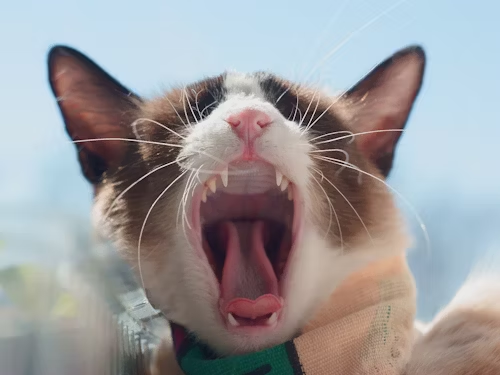
- Panting: Yes, cats sometimes pant! It looks like a dog panting—open mouth, quick breaths, maybe a little tongue. It can happen after crazy play or if they’re too hot. But listen, because it’s rare. If your cat is panting for no obvious reason, especially while resting, it’s a sign to call your vet.
Let’s Unpack the Reasons Why Your Cat Might Be Cat breathing fast
A Cat breathing fast rate is a symptom, a clue. It’s your cat’s body trying to solve a problem. The causes range from “oh, that’s nothing” to “we need to go to the vet right now.” We’ll start with the simple stuff.
1. Just Worn Out from Play
(That “Cat breathing fast after playing” search? This is it.)
You know how you feel after sprinting up a flight of stairs? Your cat feels the same after a killer session with the laser pointer or a mad dash through the house at 3 AM (we’ve all been there). Their muscles need more oxygen, so their Cat breathing fast speeds up to deliver it. This should calm down within a few minutes once they’ve caught their breath. If the heavy breathing lasts way longer than the play session, it’s worth mentioning to your vet.
2. They’re Stressed or Scared
(Yep, “cat stressed breathing fast” is a common worry.)
Cats are emotional creatures, and stress hits them hard. A sudden scare or ongoing anxiety can trigger a surge of adrenaline, making their heart race and their Cat breathing fast quicken.
Think about what’s changed:
- Did you just get the carrier out? (Instant stress!)
- Are there fireworks or thunder booming outside?
- Is there a new cat in the yard staring through the window?
- Did you just moved the furniture around?
Their breathing should go back to normal once they feel safe again. Providing a quiet, secure hiding spot can work wonders.
3. Feeling the Heat
(If you looked up “cat panting in heat,” you landed here.)
Cats don’t handle heat as well as we do. They can’t sweat it out, so they pant to cool down from the inside. If your house is warm or they’ve been baking in a sunbeam for too long, you might see some panting.
This is a warning sign. If you see it, help them cool down—move them to a cool, shady spot, offer cool water, and maybe put a damp towel on their fur. If it doesn’t resolve quickly or they seem lethargic, it could be heatstroke, which is deadly serious.
4. They’re Hurting
This is a big one that we often miss. Cats are champions at hiding pain. A change in breathing is sometimes the only tiny signal they give us that something hurts.
The pain could be from anything:
- A sore tooth making it hard to eat
- Arthritis in their hips or spine
- A nasty urinary tract infection
- An injury you didn’t see happen
The pain causes stress and anxiety, which makes them breathe faster. If your Cat breathing fast rapidly and also acting withdrawn, hiding, or flinching when you touch them, pain is a prime suspect.

Cat breathing fast
Cat Inhaler Spacer with Unique Panic Soother & Sensitive Breath Indicator – Designed for Cats with Asthma & Respiratory Issues, Includes 2 Cat Inhaler Masks
5. Fluid Where It Shouldn’t Be (Pleural Effusion)
Now we’re getting into the serious medical stuff. This means there’s fluid building up in the space around the lungs, which is a major problem. It’s like trying to inflate a balloon inside a water bottle; the lungs can’t expand properly.
To compensate, your cat will take rapid, shallow, and—importantly—labored breaths. You’ll see them struggling. This fluid can build up for a few reasons, like heart disease, an infection like FIP, or cancer. It’s critical to get them to a vet immediately so the fluid can be drained and the underlying cause can be treated.
Key Differences: Fast Breathing, Panting, and Labored Breathing
It’s easy to mix up these terms, but understanding the distinction can help you communicate more effectively with your vet. While “fast breathing” is a broad umbrella term, the specifics matter a great deal.
| Term | What It Looks Like | What It Might Mean |
|---|---|---|
| Tachypnea (Fast Breathing) | Rapid, shallow breaths. The cat may otherwise seem normal, or it may be a precursor to more serious signs. The chest moves quickly but without immense effort. | Ranges from normal (after exercise) to serious (pain, early heart disease, fever). |
| Dyspnea (Labored Breathing) | Difficult or distressed breathing. You will see obvious effort: the belly may heave, the elbows might stick out, the neck is extended, and the cat may breathe with an open mouth. Nostrils may flare. This is always a medical emergency. | A sign of severe oxygen deprivation. Caused by fluid in lungs/chest, asthma attack, pneumonia, or other critical conditions. |
| Panting | Open-mouth breathing, often with a rapid rhythm and a slightly protruding tongue. Similar to a dog. It can look like a smile or a grimace. | In cats, this is uncommon. It can be benign after intense play or due to extreme heat, but it can also indicate severe stress, pain, or underlying respiratory/cardiac issues. |
6. Feline Asthma: The Feline “Asthma Attack”
(This is a big one for folks searching “cat asthma attack symptoms.”)
Imagine trying to breathe through a narrow, straw-like tube. That’s what a feline asthma attack can feel like for your cat. It’s essentially an allergic reaction that causes the airways in the lungs to constrict and get inflamed, making it incredibly hard to exhale.
You might not just see fast breathing. Listen for a dry, hacking cough—owners often describe it like their cat is trying to pass a hairball but nothing comes up. They might crouch low to the ground with their neck extended during these coughing fits. It can be scary to watch, but the good news is that it’s manageable with medication, often even with a little inhaler made just for cats (yes, really!).
7. Heart Disease: When the Heart Struggles
(This answers those worried searches for “cat heart disease breathing.”)
This is a really common and serious cause, especially in older cats. When a cat’s heart isn’t pumping efficiently, two problems can happen that affect breathing:
- Fluid can back up into the lungs (a condition called pulmonary edema), essentially making them drown from the inside. It’s as awful as it sounds.
- The heart can’t pump oxygenated blood around the body effectively, so the body tries to compensate by Cat breathing fast to get more oxygen.
Cats with heart disease often have labored breathing (remember that term from part one?) and might be extra lethargic. Sometimes, you might notice their gums are a bluish color because their blood isn’t getting enough oxygen. Certain breeds, like Maine Coons and Ragdolls, can be predisposed to heart issues, but it can happen to any cat. This is why a vet check-up is crucial for any persistent fast breathing.

8. Respiratory Infections: The Kitty Cold and Beyond
(Covers searches like “cat URI breathing” and “cat pneumonia.”)
Just like us, cats can get nasty colds. Upper Respiratory Infections (URIs) are common, especially in cats from shelters. They’re often caused by viruses like feline herpesvirus or calicivirus.
While you’ll usually see classic cold symptoms first—sneezing, runny nose, goopy eyes—the congestion and inflammation can sometimes make its way down into the lungs, leading to faster, more labored breathing. If it progresses to pneumonia (a lung infection), the Cat breathing fast will become obviously difficult and will require immediate antibiotic treatment.
9. Anemia: Not Enough Red Blood Cells
This one is a bit less obvious. Red blood cells are the little delivery trucks that carry oxygen from the lungs to the rest of the body. If your cat is anemic (meaning they have a low red blood cell count), they have fewer trucks to make deliveries.
Their body’s solution? Make the lungs “breathe” faster to try and load the few available trucks with as much oxygen as possible. So, the Cat breathing fastis a response to a problem happening elsewhere. Anemic cats often have those very pale white or grey gums we talked about in the emergency section. Anemia itself isn’t a disease; it’s a symptom of something else, like parasites, kidney disease, or even poisoning.
10. Other Serious Conditions
Unfortunately, the list doesn’t end there. Fast or labored Cat breathing fast can also be a sign of even more severe issues, which a vet would need to diagnose.
- Lung cancer or tumors: A mass in the lungs or chest cavity takes up space, preventing the lungs from expanding.
- Blood clots: A particularly nasty and painful clot can lodge in the main artery to the hind legs (a saddle thrombus), causing paralysis and extreme, painful breathing.
- Trauma: A fall or a kick can bruise the lungs or cause air to leak into the chest cavity, making Cat breathing fast difficult.
I know that’s a heavy list. But remember, you’re not trying to diagnose your cat yourself. You’re gathering information to become your cat’s best advocate.

Cat breathing fast
Inhaler Aerosol Chamber for Cats Inhaler Spacer for Giving Medicine to Cat with Breathing & Delivering Medication Fits (for Cat)
What to Do Right Now: A Step-by-Step Action Plan
So, you’re looking at your cat, they’re Cat breathing fast, and you’re not sure if it’s an emergency. Here’s what to do. Take a deep breath yourself first—your calmness helps them.
Step 1: Pause and Assess.
Don’t swoop in and grab them immediately. From a distance, do a quick mental check against the emergency red flags from the top of the article. Is their mouth open? Are they straining? What color are their gums? This will tell you if you need to skip straight to Step 5.
Step 2: Check the Gum Color.
If they seem calm enough to approach, gently lift their lip. We’re looking for a nice, healthy pink. If you see pale, white, blue, or purple, it’s go-time.
Step 3: Reduce Stress.
If their gums are pink and they’re just Cat breathing fast, make their world smaller and quieter. Turn off the loud TV, ask the kids to play quietly, and make sure the dog isn’t bothering them. Sometimes, just reducing the chaos is enough to help them settle.
Step 4: Don’t Force Anything.
Please, don’t try to give them water, food, or any kind of human medication. You could accidentally cause them to aspirate (breathe liquid into their lungs) or make the problem worse.
Step 5: Call Your Vet.
This is always the right move. Even if it’s 2 AM, most areas have emergency clinics. Call them. Describe exactly what you see: “She’s taking about 60 breaths a minute while sleeping, her gums are pink, but her stomach is moving a lot.” They will tell you if you need to bring her in or if it’s safe to monitor for a short time.
What Happens at the Vet? A Peek Behind the Curtain
Let’s be real—walking into the vet’s office with a worried heart and a carrier holding your struggling kitty is stressful for everyone. You might be wondering what they’re going to do in there. Well, think of your vet as a detective, and Cat breathing fast is the first clue. They’ve got a whole process to figure out the mystery.
It usually starts with you. Yep, you’re the key witness! The vet will probably hit you with a bunch of questions, so it helps to be ready:
- “When did you first notice something was off?”
- “Has she been coughing or hiding more than usual?”
- “Could she have gotten into anything she shouldn’t have?”
- “Is she still eating and using her litter box normally?”
After the chat, it’s hands-on time. The vet will give your cat a gentle but thorough once-over. They’ll listen to her heart and lungs with a stethoscope—those little murmurs or crackles we can’t hear tell them a huge story. They’ll check her gums, feel her belly, and just generally see how she’s responding.
Then comes the part that often gives the biggest answers: the tests. It’s not about running every test for no reason; it’s about building a case.
- The X-Ray: This is a huge one. A quick chest X-ray lets the vet see a clear picture of what’s happening inside. Is the heart enlarged? Are the lungs hazy? Is there fluid hiding in there? It’s like turning on a light in a dark room.
- Blood Work: This is the inside scoop. A small blood sample can tell them if there’s an infection, if the organs are happy, or if there aren’t enough red blood cells (anemia). It rules a lot of big things in or out.
- The Ultrasound: If the X-ray shows something funky with the heart, they might suggest an ultrasound. It’s a painless way to watch the heart valves moving and see how well blood is pumping.
I know it can feel like a lot, and the cost can add up. But each step is a move toward getting a real answer, which is the only way to get your cat the right kind of help.
So, How Do We Fix This? The Treatment Path
Here’s the thing—you can’t just treat “Cat breathing fast.” You have to treat the reason behind it. The plan your vet comes up with will be totally unique to what’s causing your cat’s trouble.
What does that look like? Well, it depends:
- For something like asthma, the fix might be a nifty little inhaler made just for cats (with a tiny mask!).
- If it’s heart disease, they’ll likely use medications called diuretics to help gently flush out any excess fluid that’s making it hard to breathe.
- A nasty infection will need a course of antibiotics to kick it to the curb.
- In a real emergency, the first stop is often an oxygen cage. This helps them literally catch their breath while the vet figures out the next move.
The goal is always to get to the root of the problem. It might feel overwhelming, but getting that clear diagnosis is what points you down the right path to getting your best friend back to their normal, purring self.
Final Thoughts: You’ve Got This
Let’s end this where we started: you noticing your Cat breathing fast is a big deal. It means you’re paying attention. You’re tuned in. That alone makes you a fantastic pet parent.
This stuff is scary, but please don’t feel like you have to have all the answers yourself. That’s what your vet team is for! Your job is to notice the change and raise your hand for help.
When you’re unsure, always, always make the call. It’s always better to be the slightly over-cautious owner who gets a clean bill of health than to wait too long and wish you hadn’t. You are your cat’s voice and their biggest champion. Trust that gut feeling of yours—it’s usually right.
Your Questions, Answered (FAQ)
My cat breathes fast in her sleep. Should I be worried?
You know, it’s funny—this is probably the question I hear the most. Cats do dream, and sometimes during a really active dream, their Cat breathing fast might get quick and shallow for a short bit. Their paws or whiskers might twitch, too! It’s usually nothing to sweat. But if it’s constant, or if she seems to be working really hard for every breath even while snoozing, that’s your cue to get it checked out.
But she’s acting totally fine otherwise! Why would I bother the vet?
I get it, it seems confusing. But here’s a little insider secret: cats are masters of disguise. They are hardwired by evolution to hide weakness. Cat breathing fast is often one of the very first signs that something is wrong, way before they stop eating or start hiding. So that rapid breath might be her only way of telling you she needs a hand. Don’t ignore that clue!
My cat is getting older and has started Cat breathing fast. Is it just age?
While our senior kitties are prone to more health issues, we should never just write something off as “old age.” Cat breathing fast in an older cat is a bigger red flag. It can be a sign of conditions more common in their golden years, like heart disease. It’s definitely worth a vet visit to make sure your senior bestie is comfortable and healthy.
She just had kittens and is breathing hard. Is that normal?
Absolutely. Giving birth is incredibly hard work! It’s completely normal for a new mama cat to pant and breathe heavily during and right after labor. She’s just exhausted. She should calm down as she rests and snuggles with her babies. But if the heavy breathing goes on for many hours after the last kitten, or she seems weak or unwell, call your vet to make sure there isn’t a complication.
Could it just be a hairball?
This is a classic mix-up! The act of coughing and gagging to get a hairball up can definitely leave your cat winded and Cat breathing fast for a minute or two afterward. The real problem is when we mistake something else (like an asthma attack) for a hairball. If the coughing happens a lot and no hairball ever appears, it’s time to ask the vet about other possibilities. For run-of-the-mill hairballs, something as simple as a hairball control formula cat food or a bit of cat-friendly laxative paste can work wonders.