
A lot of wildlife lovers and conservation activists are enthralled but annoyed by how little is made of this species. Chinese mountain cat. It is also known as”the Chinese desert cat Felis bietti, or just”the” Chinese wild cat. While it’s a very few cat species found that live in China however, specific information–such as the size of its population as well as its preferred habitats and its survival issues–usually remains unobtainable. The curious reader might wonder if destruction of habitat as well as the expansion of humans in the Tibetan Plateau are leading this unique feline to becoming extinct. It is also possible to ask what the best way to help conservation efforts while away. If you’re in search of reliable details, the most current information or a comprehensive outline of the major dangers and prospects for the future, this article is made specifically for you. Are you interested in the real background of this small wild cat, and what you can do to ensure the survival of this cat?

Quick Solution (Crux of the Article)
This is the quick answer for people looking for an instant review: Chinese mountain cat (Felis bieti) is a uncommon, high-altitude feline that is found mostly in the western part of China (notably Qinghai, Sichuan and Gansu provinces). The shaggy coat of sand-gray and distinct facial stripes aid to hide from the rough, rocky terrain in the Tibetan Plateau. However, climate change and habitat fragmentation and conflicts between humans and wild animals are a serious threat. Conservation measures currently in place–including protected areas as well as eco-research–may offer a little possibility, however more vigorous efforts are required to maintain an unchanging population. If you’re interested in the detailed information–from physical characteristics to threat factors, and the way local communities are affected by the species, read on to find out all you can learn about this fascinating feline.
1. Get to know The Chinese Mountain Cat (Felis bieti)
Hook/Overview
It is said that the Chinese mountain cat is frequently overlooked by other famous wild cats, such as snow leopards and Bengal Tigers, yet it occupies an distinct position in the diversity of Asia’s. Sometimes referred to”the Chinese desert cat the rare predator is found on across the Tibetan Plateau, and is among the most rare wild cats across the globe. Its long coat as well as gentle stripes along its back, it is Chinese mountain cat perfectly designed for the harsh and cold areas where temperatures are prone to drop into extreme lows.
What makes Felis Bieti different from other species what sets Felis bieti apart is how scientists in the past was aware about its behaviour as well as its diet and location. For a while there were no sightings that people wondered whether this particular species was legend or not. With the advent of modern technology — such as cameras traps as well as surveying in the field–we are now able to collect more data However, significant gap in our understanding remains.
Why It’s Important
- Limited distribution Limited Distribution: It is the Chinese mountain cat can be limited to a few areas that are located on the Tibetan Plateau in the western part of China. The small area renders it extremely susceptible to degrading habitat as well as human-induced encroachment.
- An indicator of Ecosystem Health As an major predator of smaller mammal (like rodents and pikas), Felis bieti indicates the overall health of the mountainous grassland ecosystem. If the number of cats decreases this could indicate deeper environmental problems.
- Very Rare Cat species within China: While huge pandas and snow leopards take the limelight while it is the Chinese mountain cat is a quiet victim of serious threat. This is a sign of the urgency to ensure targeted conservation for the sake of preserving the biodiversity.
Purpose of the Article
The objective of this show is to present the viewer with a complete investigation into the Chinese mountain cat.
- The Taxonomy of HTML0 and the Naming Understanding the reason why scientists categorize the HTML0 under Felis Biesi and why it stands distinct from other tiny Asian wild cats.
- Physical traits and adaptations Discover its distinctive coat, body shape as well as the specialized characteristics that allow it to endure extreme altitudes.
- Habitat Range: Learn the places where Chinese desert cats reside–delving deep into the Tibetan Plateau environment and how human actions can fragment the habitat.
- Verhalten, Diet and reproduction Discover the cat’s nighttime lifestyle and solitary lifestyle and dependence on rodents for food.
- Threats and Conservation Learn how loss of habitat as well as climate change and poisoning of rodents threaten the species, and what protection measures are in place.
- Connection to Local Community Study the way in which the attitudes of local communities and possible conflicts affect the chances of survival.
- Comparisons with similar Wildcats Compare how Felis bietti compares against closest relatives like the pallas’s cat (Otocolobus manul) as well as the leopard cat (Prionailurus bengalensis).
- Future Outlook: Discover the latest cameras trap techniques, eco-research as well as the need towards more conservation zones..
Table: Quick Facts About the Chinese Mountain Cat
| Characteristic | Detail |
|---|---|
| Scientific Name | Felis bieti |
| Common Names | Chinese mountain cat, Chinese desert cat |
| Distribution | Western China (Qinghai, Sichuan, Gansu) |
| Habitat | Steppes, scrublands and grasslands on the Tibetan Plateau |
| Average Weight | 6-8kg (13-17.6 pounds) (estimates differ) |
| Conservation Status | Oft, they are classified as Very vulnerable/Near Threatened |
| Primary Diet | Pikas, small rodents sometimes birds or hares |
| Distinguishing Features | Sandy-gray coat, distinctive face stripes, a long tail |
2. Taxonomy and Naming
Scientific Classification
This Chinese mountain cat belongs to the Felidae family that includes the entire range of domestic and wild cats. It is specifically part of the genus Felis which is why it has the formal known scientific title Felis Bieti. It also encompasses other smaller wild cats, such as that of wildcat ( Felis silvestris) as well as felines like the Black-footed Cat ( Felis nigripes). The researchers have debated for years whether Chinese mountain cat could be part of the wildcat or an independent species. The majority of current research supports its unique position as Felis Bieti partially because of its distinct adaptions to life at high altitudes on the Tibetan Plateau.
Common Names
- Chinese Mountain Cat
- Chinese Desert Cat
- Occasionally, just Felis Biesi within scientific contexts
Cats’ name as “Chinese desert cat” can cause confusion since its primary area of habitat doesn’t actually resemble a desert but instead, barren scrublands as well as steppe zones at higher heights. However, this term is still used due to certain arid and sandy parts that are part of the Tibetan Plateau resemble desert terrain.
Evolutionary Background
Biologists are fascinated by that the Chinese mountain cat to be particularly fascinating due to its habitats that are similar to the Cat of Pallas ( Otocolobus manul)–another smaller wild cat that has adapted to higher elevations. While these two species reside within an altitudinal region that is overlapping the morphological evidence and genetic evidence indicates that they diverged some time ago, developing specialized characteristics to withstand dry atmospheric conditions as well as extreme temperatures. In addition, they share an even closer taxonomic connection with the wildcats (e.g., Felis silvestris) which highlights the way that semi-arid and mountainous terrains within Asia are the crucible of evolution for different feline lineages.
3. Physical Characteristics
As compared to other felines with similar sizes in size, unlike other felines of similar size, the Chinese mountain cat ( Felis bieti) is distinguished by a number of characteristics that allow it to live a living in extreme, high-elevation environments. From its thick, insulation-rich fur, to its sturdy frame of the body, every adaptation improves the chances of survival in areas that is prone to extreme winters and low vegetation cover.
Size and Weight
- The length of the body generally ranges between 75 to 90 cm (including the tail) but accurate measurements are difficult because of the cat’s unpredictable behavior.
- Weight Variation: It is estimated to be 6-8kg (13-17.6 pounds) in the average. Some people may be heavier in regions with a wealth of resources.
- Sexual Dimorphism Males can weigh a bit more and larger than females. However, extensive field research studies are required to establish the validity of these differences.
Quick Comparison Table
| Measurement | Approximate Range |
|---|---|
| Body Length (head-tail) | 75-90cm (30-35 in) |
| Weight | 6-8kg (13-17.6 pounds) |
| Shoulder Height | 25-35cm (10-14 inch) (estimation) |
Fur Color and Markings
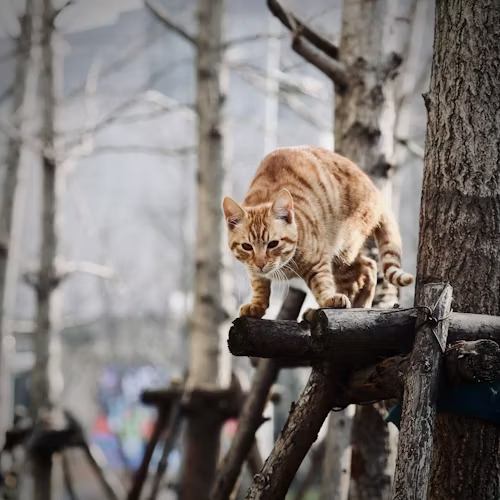
The most impressive physical traits characteristic of Chinese mountain cat is the white coat that is sandy and gray which is usually strewn with tiny spots or stripes which blend effortlessly with grassy or rock background. At night or at some distances, the markings can be barely noticeable, a great disguise against predators as well as human viewers alike.
- Face Stripes A subtle yet distinct typically extended from the eyes to cheeks.
- A bushy tail with dark Rings The tail will typically be wrapped around, with an elongated tip, which can seem black.
- seasonal variation A few anecdotal reports shows that fur on cats gets thicker and thickens in colder weather which aids in insulation as well as camouflage.
Adaptive Traits
Dense Fur for Cold Climates
The high grasslands on the Tibetan Plateau are able to withstand cold temperatures that are subfreezing as well as sudden changes in weather. In the end, it is no wonder that the Chinese mountains cat’s fur can be extremely luxurious and thick and supple, helping to minimize losses of heat as well as providing insulation from wind chill.
Ear Shape and Size
Although less striking than Cat of Pallas, Felis bieti generally has smaller, more rounded ears. This reduces the possibility of frostbite, and preserving the body’s warmth. Ear structures also aid in the detection of small prey through amplifying the noises in grass or beneath snow.
Specialized Hunting Adaptations
- Low-Profile and Stealth Movement A slim frame and sturdy leg muscles enable it to stroll quietly and swiftly attack undetected prey (such as mice, pikas or even small birds).
- Coloration This sandy-gray shade is also a an unsettling color that hides the outline of the cat in the rocky slopes, shrubs as well as dry grasses.
4. Habitat and Geographic Distribution
Knowing how to understand the Chinese mountain cat’s home is vital to comprehend how this cat is mysterious and fragile. Often referred to as”the Tibetan Plateau wild cat, Felis Bieti is a fan of high-altitude grasslands and scrublands as well as steppe ecosystems that are mainly found in the western part of China. The vast region stretches across all provinces, including Qinghai, Sichuan, and Gansu which are with harsh climates, a lack of plant life, and extreme elevations characterize the terrain.
Primary Locations
- Qinghai Province: Large swathes grassland and semi-arid terrain scattered with tiny shrubs. Despite the low density of human populations cattle grazing and an expanding infrastructure have become more common.
- Sichuan Province: Although it is well-known by its huge pandas as well as the lush bamboo forests of Sichuan, its western regions also have mountains with steppe-like terrain with small areas of Felis bietti.
- Gansu Province: It is located within both the Tibetan Plateau and the deserts of northwestern China, Gansu provides transitional environments where animals such as the Chinese mountain cat may encounter pikas and rodents within open fields.
Types of Environments
- Grasslands as well as Steppe The majority of these areas are dominated by a hardy grass These zones are subject to significant variations in temperature during the day and at night. This is why which the cats’ thick fur can help to endure.
- Scrublands Scrublands with scattered bushes are places to hide for the cat as well as its prey. This allows for sneaky hunting.
- Rock Outcrops are ideal places to view from for the nighttime hunts. They also provide secure dens for kittens to raise far from predators.
LSI Keywords Note Keywords like ” Chinese mountain cat habitat,” ” where do Chinese desert cats live,” and ” Tibetan Plateau wild cat” help users answer questions about the cat’s geographic area.
Habitat Fragmentation
Despite its remoteness, human activities have a tendency to alter the fragile ecosystems of
- infrastructure Projects New railroad lines, roads and expansion of urban areas cut across the grassland that was once continuous.
- Agriculture and Livestock In the case of overgrazing, sheep, goats and yaks may limit the supply of smaller mammals, which are the primary prey of Felis Bieti.
- Mining as well as Resource extraction Mining for minerals can cause disruption to soil and vegetation, which leads to environmental degradation and loss of habitat.
As habitats are reduced or isolating, the cat’s capacity to breed, hunt and wander decreases. This puts the unique cat breed within China at risk of further deterioration.

5. Behavior and Diet
It is believed that the Chinese mountain cat is extremely difficult to research directly mostly because it lives in distant terrains, and is averse to away from humans. Therefore, a large portion information we have originates from camera traps and sporadic field observation as well as occasional conversations with herders from the local area.
Nocturnal and Elusive Lifestyle
- Activity patterns The majority of experts categorize this species to be night-time hunters and hunting peak periods occurring in evening or at night..
- Elusiveness Based on their love to secluded and rugged terrains they can disappear among rocky cliffs or scrubs with ease. Residents of nearby communities are not able to spot them, thus fueling their obscure reputation.
Fun Information Herders often call them “ghost cats” due to their quiet and rare appearance. are seen in close proximity to humans’ settlements.
Hunting Techniques
Felis Bieti is mostly the specialist in small mammals:
- Prey Concentration Rodents, which are akin to mice voles and gerbils as and pikas (a regular food source for several high-altitude regions).
- Occasional birds The birds that are ground-nesting or birds that are foraging on the steppe could be prey for predators, particularly when the numbers of rodents decrease.
- stealth, as well as Pounce the cat follows its prey in the darkness, by using low body position and advanced ears to sense the movement of its target before making a sudden attack.
Territorial Behavior
- A solitary nature like other cats The Chinese mountain cat wanders around and hunts by itself.
- marking and protecting Territories Urine spraying, marks of claws on rocks, as well as scent rubs aid in defining individual areas. They reduce conflict by making sure neighbors don’t have to cross paths.
- The Home Ranges that overlap Males may have overlaps with several females however direct encounters are not common outside breeding seasons.
6. Reproduction and Life Cycle
The lack of field research data suggests that there are still gaps knowing Felis Bieti‘s reproductive strategy. But, studies on similar smaller wild cats has revealed a number of similarities.
Breeding Season
- Timing of the year The speculations suggest mating from late winter until early spring. This is correlated with improved weather conditions and expanding prey availability.
- Gestation length Most likely to be around 60 to 70 days However, exact figures are not known.
Litter Size and Kitten Development
- The typical number of offspring Experts suggest litters consisting of 4 to 5 kittens that are in keeping with the other Felis breeds.
- Maternal care Females raise her children on her own, searching for burrows within rock crevices, or burrows, to protect the young against predators.
- Weaning and independence Kittens will likely start exploring at 6-8 weeks learning hunting techniques by being observant of their mother. Complete independence is likely to be achieved within 4-6 months, but the exact timings differ.
Challenges in the Wild
- Lower Reproductive Rates If a female has only a handful of kittens each an entire year increase in population is low. The sudden rise in mortality of kittens because of predation, or extreme weather conditions, could greatly impact overall numbers.
- Predation The larger carnivores (like Eagles, foxes, or even eagles) may pose dangers for young cats.
- climate extremes sudden snowstorms or droughts can reduce predator populations and threaten the health of lactating mothers and kittens.
7. Threats and Conservation Status
It is believed that the Chinese mountain cat ( Felis bieti) often referred to as a “vulnerable” or “near threatened” species, has to face a variety of threats in its rough home. Although the precise IUCN Red List classification is subject to change based on continuing research, many experts believe that the unique cat species found in China is in danger of losing its ground.
Key Threats
- Habitat Destruction
- Infrastructure Development: Railways, roads, and sprawling urban areas cut up part of Tibetan Plateau, making grasslands less continuous, which cats require.
- Expanding Agriculture: The overgrazing of livestock decreases the number of prey species such as rodents and pikas, which causes cats to hunt smaller, less resource-rich pockets.
- Human-Wildlife Conflict
- Perceived Risk to Livestock Although Felis Bieti usually kills smaller mammals farmers in the area frequently blame it for poultry or other small losses to livestock. The killings can be retaliatory in the event that cats are seen near settlements.
- poisoning Rodent prey To manage rodent populations, the communities can resort to poisons that can harm or diminish the amount of cat food available.
- Climate Change
- Changes in patterns of rainfall as well as changes in temperature could disrupt the abundance of prey which can force animals like the Chinese mountain cat to move into less secluded areas of habitat.
Population Trends
The exact number of individuals is still difficult however, camera trap data as well as sporadic sightings suggest an ongoing declining numbers throughout many areas. Populations that are fragmented could fall beneath viable breeding levels in the event that threats are not addressed.
Conservation Measures
- Protected Zones within Western China: Certain Nature reserves, notably those in Qinghai as well as Sichuan provide certain levels of protection of the habitat.
- Anti-Poisoning Campaigns Environmental organizations and non-governmental organizations sometimes cooperate to decrease pesticide poisoning efforts.
- Ecological Studies: Field research is ongoing to identify the home ranges of species, breeding locations and inter-species connections and can be used to inform the future strategies for managing land.
8. Relations to Local Communities
It is believed that the Chinese mountain cat lives in harmony with the herders, farmers and the rural inhabitants of the Tibetan Plateau. In contrast to larger felines such as snow leopards that could menace sheep and yaks Felis Bieti is not likely to take on large animals. However, tensions between humans and wildlife persist.
- Encroachment on Farmland
The expansion of farms and the grazing areas restrict the cat’s hunt places, and sometimes force cats into proximity with human animals. - Retaliatory Killing
If local beliefs portray cats as predators of farm animals in small quantities the threat can escalate quickly. The gap in awareness of the public means that people aren’t aware of the threat to the cat’s status. - Cultural Attitudes
In certain communities, the Chinese mountain cat carries folk significance–sometimes revered for rodent control, other times viewed with superstition. The culture-specific ambiguity creates consistent protection guidelines difficult. - Collaborative Projects
Effective conservation initiatives that are based on community usually involve training livestock owners to use non-lethal methods of deterring or eco-friendly land-use methods. These initiatives could include enclosures for livestock as well as rotational grazing. informing farmers about cat’s ecological function.
9. Comparatives to Similar Small Asian Wildcats
This Chinese mountain cat isn’t alone in the small feline that is found in Asia’s mountains. The understanding of how it is different from the other species is essential information for identification as well as conservation.
- The Cat of Pallas ( Otocolobus manul)
- It shares the cat’s high altitude area, however it sports a larger facial appearance and larger fur that is suited for more frigid steppes.
- The majority of them are found farther north or in higher elevations. Usually with shorter limbed.
- Leopard Cat (Prionailurus bengalensis)
- More widespread, including woodlands, wetlands, as well as lower elevations.
- Usually, the coat has bold stripes and spots, separating the coat from Felis Bieti‘s more subtle coat.
- Importance of Distinguishing Species
- Researchers in the field use morphological features, like ears or tail markings, to be able to identify species accurately on camera traps. Accurate ID helps inform region-specific conservation plans.
10. Ongoing Research and Future Prospects
Scientific Studies and Field Observations
Recent decades of cameras traps as well as satellite trackers have transformed our understanding of Felis Bieti. Some of the key insights include:
- Home Range Dimensions The preliminary data suggest the cats are able to control relatively large territory due to the dearth of predators.
- Population Density estimates Camera trap photos are cross-referenced in order to determine frequency of cats in certain reserves.
- Behavior observations Rare glimpses of territorial disputes, mating or mother-kitten relationships provide crucial information gaps.
Genetic Studies
Biologists are also studying the possibility of cross-breeding of domestic cat species. The early findings show little genetic mixing, possibly due to Chinese mountain cats are drawn to isolated terrains, which means there are fewer wild or stray domestic cats. However, monitoring is crucial, because the process of hybridization may weaken the purest Felis Bieti lines.
Future Outlook
- Improved Habitat Conservation Expanding reserves, or creating new ones in areas that are not being surveyed in west China can help to stabilizing the local population.
- Awareness Actions The goal is to educate local community members about the importance of cat’s ecology and an ethical rodent management strategy, could help reduce poisoning accidents that happen accidentally.
- Advanced Tools for Research New technologies, such as drones to fly mapping, or the analysis of DNA in the scat–offer higher-quality data and providing better ways to protect these cats.
11. Interesting Facts and Trivia
- Fossil Records: Paleontologists have traced their Felis genealogy within Central Asia back millions of years ago, which suggests Chinese mountain cats could be genetically ancestral to the area.
- local Nicknames There are a few Tibetan herders are reported to call them “grassland ghosts,” referencing their night-time hunting adventures.
- Rare footage Rare footage footages of wildlife captured taken by photographers of wildlife generate worldwide interest and shed an understanding of the cat’s movements as well as its posture and interaction within the nature.
12. Conclusion: Protecting the Chinese Mountain Cat
Summary of Key Points
A Chinese mountain lion makes a statement as a survivalist at high altitudes and has survived harsh climates as well as fragmented habitats in Qinghai, Sichuan, and Gansu. With a distinct sandy coat and a the nocturnal hunter’s style that quietly ensures the balance of nature by controlling populations of rodents. However, threats–such as the loss of habitat, poisoning or conflict between humans and wildlife–threaten to destroy the cat’s chances of survival.
Call to Action
No matter if you’re nature lover, conservation researcher and/or just a novice to Felis Bieti on your first visit This is ways you can help:
- Help with conservation initiatives Contribute or become a volunteer for groups that are leading anti-poisoning campaign or creating zones of protection.
- Keep track of research updates Follow research updates the field research of institutions, non-governmental organizations, as well as local authorities. By sharing these studies, you can increase the awareness.
- Spread Awareness: If you’re traveling to western China or engaging with local communities, promote the cat’s ecological importance–particularly its role in rodent control.

